
Subaru Impreza WRC 97.001

Production year
1996-1997
Engine type
Flat-4 T
Engine name
EJ20T
Max Speed
260 km/h
Power
300 hp
Max RPM
7500
0-100 km/h
4.5 sec
Torque Peak
470 Nm
Transmission
5-MT
Weight
1230 kg
Layout
4WD
Number Produced
1
Manufactured in
Japan
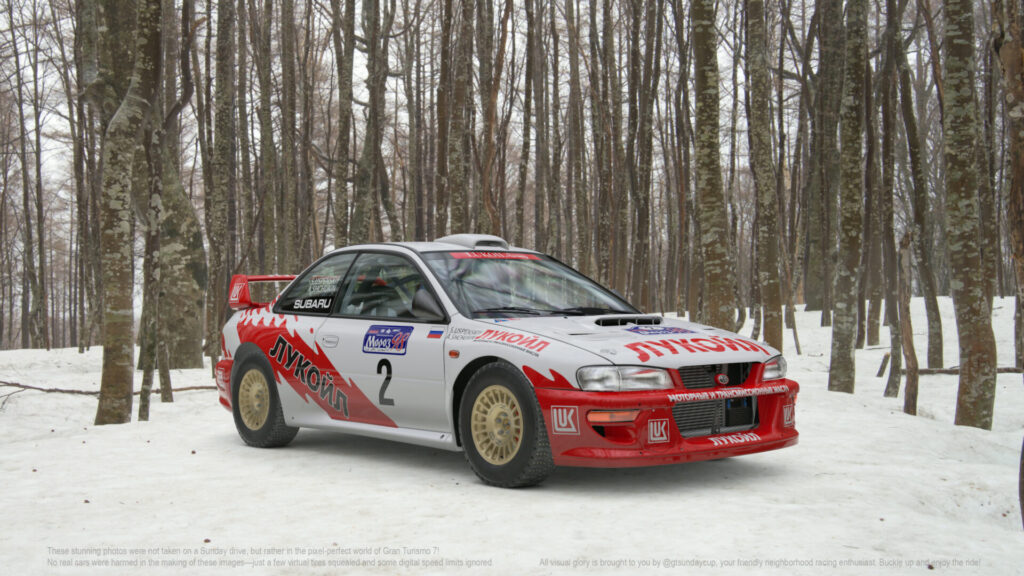
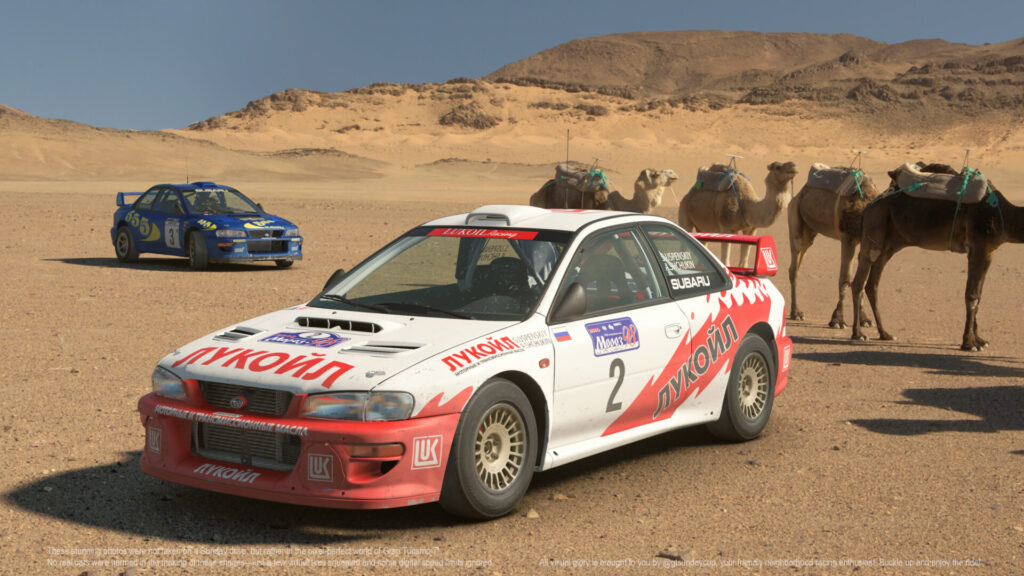
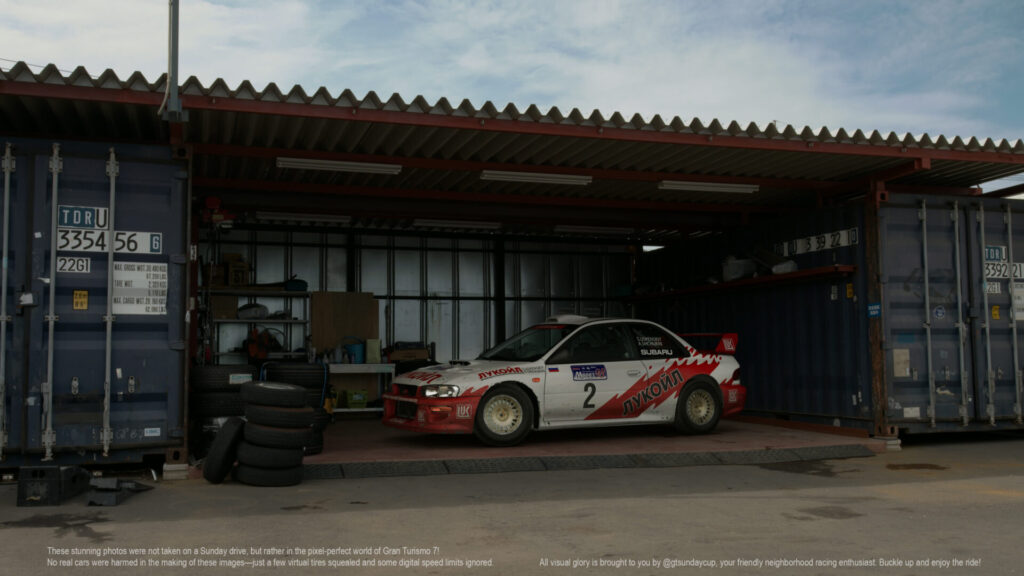
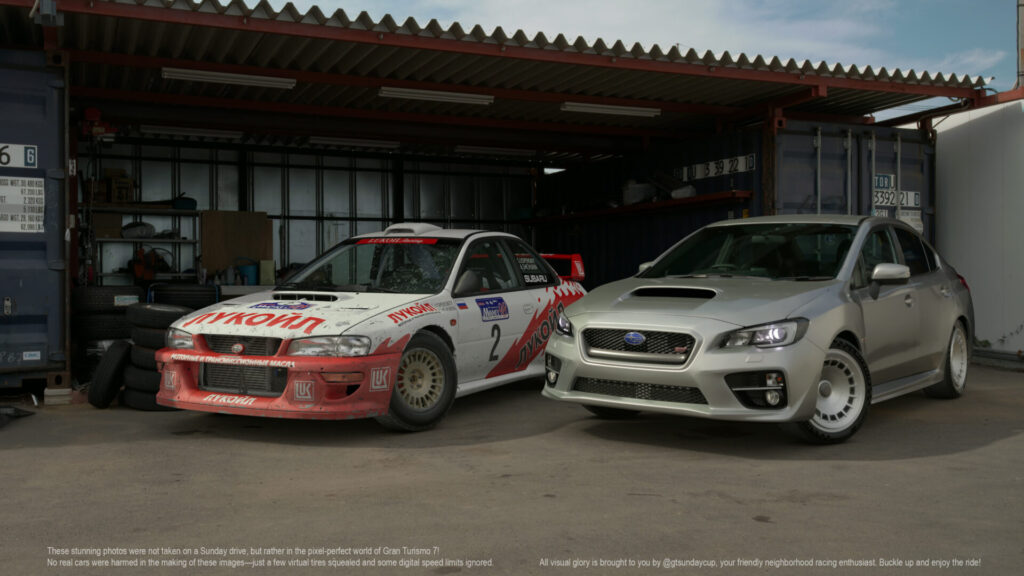
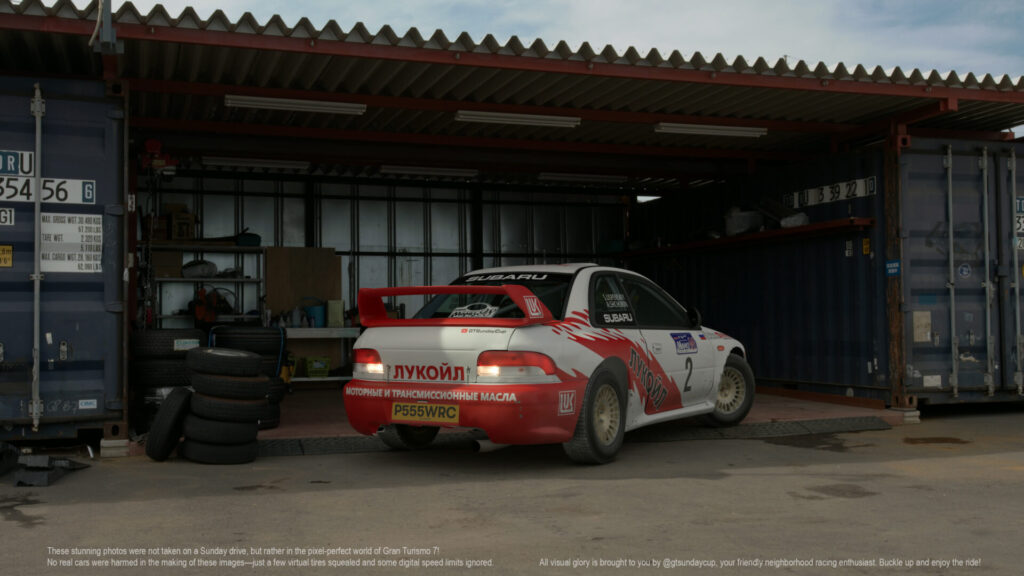
The True Story of Lukoil’s Subaru Impreza WRC
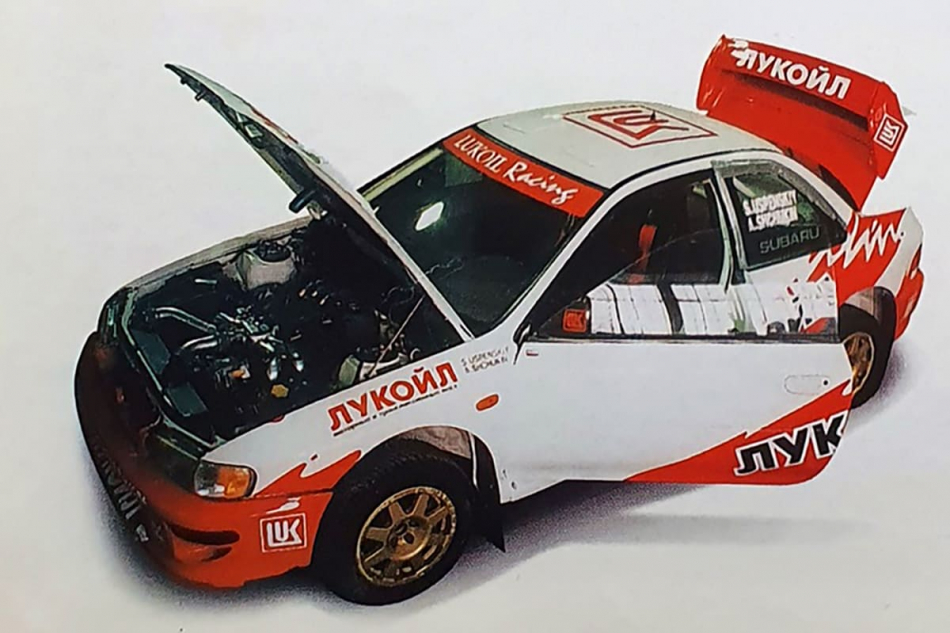
We are starting a series of articles on the history of Russian rallying. Or more precisely, on the history of the most famous cars that competed on Russian special stages. The series of articles will open with material on the first Russian car in the World Rally Car category – the Subaru Impreza WRC, which was driven in 1998 by the crew of Sergey Uspensky and Alexey Shchukin as part of the Lukoil Racing team.
But I will begin this long story with a slightly different topic, accompanying the story with photographs of the Lukoil car…
Original of the article is take from here and translated into english. All credits for such amzing article to https://matador.tech/
And it all started so well!
Never in my life has a single text taken up so much of my time. I admit honestly – when I sat down to write this material in June 2020, I couldn’t even imagine what it would all turn into. A simple selection in the style of “10 cars that…” turned into a months-long study.
I had to conduct dozens of conversations with various people from different countries of the world, shovel through tons of information and photos, encounter a real conspiracy of two factory teams of the World Rally Championship – and reveal their secret, which is the main secret of world rallying. And this is not a joke.
The road to hell is paved with good intentions
What is an investigation in the context of motorsport? Processing existing information, searching for missing facts, searching, meeting and communicating with racers and team members, working with your own photo archive and familiar photographers, analyzing the collected data, exchanging data with other rally historians from around the world…
During the search, I came up with the idea of seriously complicating my task and limiting the top ten “not included in museums” cars to those cars that Russian racers had raced in at some point.
Why is it more difficult? Because there are virtually no archives of Russian rallying from the nineties and noughties. Almost all the websites from those years have died and disappeared from the Internet. There are few photographs, and information on the history of a particular chassis is either non-existent or full of errors.
But that makes the challenge all the more interesting! At that time I had no idea what it would lead to…
Facts, facts, facts. Photos, photos, photos. The piece of the article is slowly starting to take shape. Now let’s spice it up with some exclusive photos and facts. Wait! What’s this?
Do you know what I love most about investigations? When you stumble upon a fact that you didn’t know when you started collecting information, but which turns everything upside down.
In this case, there were two such facts. First, I learned that the car I wanted to include in my article was included in several different well-known and secret stories at once, and it was simply impossible not to talk about it. And second, it became obvious that no one knew the current location of this very car except for a couple of people on the entire planet. And instead, photos of a duplicate car were published on the Internet. A fake rally car that competed in Russia? Cool!
In general, I understood – my selection was crying, there is enough material for a separate detective novel here. I had to rewrite the introductory text and make a finished story about the VAZ-21124-07 VK Super 1600. It was published as a separate text, after which I sat down to write a detective story, the first part of which I present to you today.
The text will be huge, but believe me – the story is very interesting and you will not find out anywhere about what I managed to dig up. Only here…
A comparison, the meaning of which you will understand at the end of the article
In the seventeenth century, a mysterious prisoner known as L’Homme au Masque de Fer – the Man in the Iron Mask – was imprisoned in French and Italian prisons. He spent more than thirty years in prison. The identity of this unfortunate secret prisoner remains a mystery to this day – there are many different versions and stories that have found their way into numerous books and films.
For example, the writer and philosopher Voltaire, in his second edition of “Questions to the Encyclopedia,” put forward the version that the prisoner was wearing not a velvet mask, but an iron one, and that the illegitimate elder brother of Louis XIV was hiding under this mask.
The unfortunate “man in the iron mask” was deprived of his name and his history. He lived his life in complete obscurity and (according to one version) did not receive the honors due to the King of France during his lifetime.
Why this excursion into history? The fact is that we managed to find a modern hero with a similar fate. He was born and immediately became a legend. Then he won a great victory in a huge northern country. From there he went to a distant southern country, where he almost died in battle. And upon returning to his homeland, he was stripped of all his titles and found himself on the dustbin of history. At the same time, his place was taken by his younger brother, an impostor. But despite everything, our hero is alive! He is deprived of his name and history, he is not given the honors (which go to the impostor), but he is alive!
And today we will tell you about this hero. More precisely, it is not a hero, but a heroine. Her name is Subaru Impreza WRC, which we know as “Lukoil’s Impreza Uspensky”.
What an entry, huh? We’re shocked ourselves!
An optional but important introduction
But before we begin the story about one of the most famous and at the same time mysterious cars of the world rally (yes, that’s right), it is necessary to say a few words about the upcoming series of articles. In different years, ex-factory rally cars of groups A and WRC were imported to Russia – the most advanced racing cars designed for rally. There were not very many of them, they always attracted special attention from spectators, journalists and competitors.
Some facts about these cars have been published, but most of the history of each car remains a secret. Or rather, remained a secret – after the publication of this series of articles, there will be practically no secrets left about them.
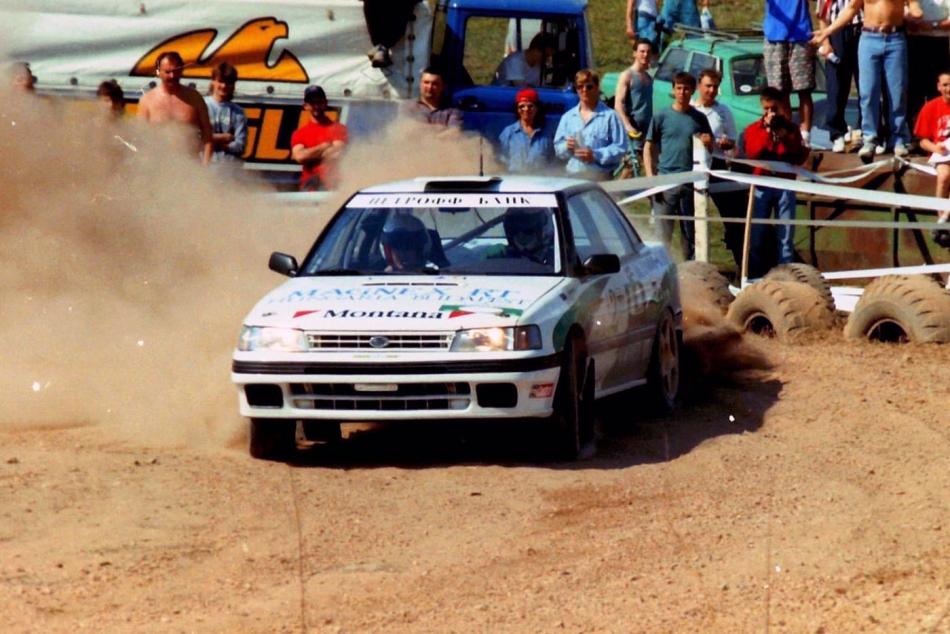
The first truly serious Group A car in Russia was the “Potapovskaya” Subaru Legacy RS Turbo 4WD, imported in 1995. A truly iconic car that blew up the world of Russian rallying from within and gave impetus to a real arms race:
Well then, shall we begin?
From 1998 to 2011, more than a dozen Subaru Impreza WRC cars (i.e. the World Rally Car category) competed in races on the territory of the Russian Federation. No one knew the exact number of cars, and no one had previously compiled a detailed history of each of them into a single story. But after a long and meticulous investigation, I managed to understand the intricacies of the movements of these cars at the turn of the century.
And the first heroine of the new cycle will be Lukoil’s Subaru Impreza WRC, which Uspensky and Shchukin used in the Russian Rally Championship in 1998.
Riddles and secrets of the world’s first ” World Rally Car “
And I’ll start from the very end. In 2015, the auction house “H&H Classic Auctions”put up for sale a very interesting lot – a real rally Subaru Impreza S3 WRC ’97. And not just any, but chassis PR0/WRC/97.001 – the first car of the category “World Rally Car” in the history of world rally!
The media – both global and Russian – happily picked up on this news. Well, how could it be? Not only was it the first car prepared in this category, but Colin McRae himself was the first to drive it. He was the one who brought the prototype of the first Subaru Impreza WRC to the tests back in 1996 – a few months before the first start in the rally.
Auction houses regularly put rally cars up for auction. And to increase interest in the lots – and also to increase the final price of the lot – they describe in detail the history of this particular car. Or more precisely, a particular chassis with a unique VIN and/or individual chassis number. Collecting such information is not easy – sometimes even those you would not expect it from make mistakes: the companies and teams that built and worked with this car.
Recently, auction houses (and not only them) have begun to focus on one Czech website, whose employees collect such information and everywhere talk about its complete reliability. But, unfortunately, their data is full of errors, inaccuracies, and sometimes even outright false information. As a result, buyers risk buying something that is not quite what they expected.
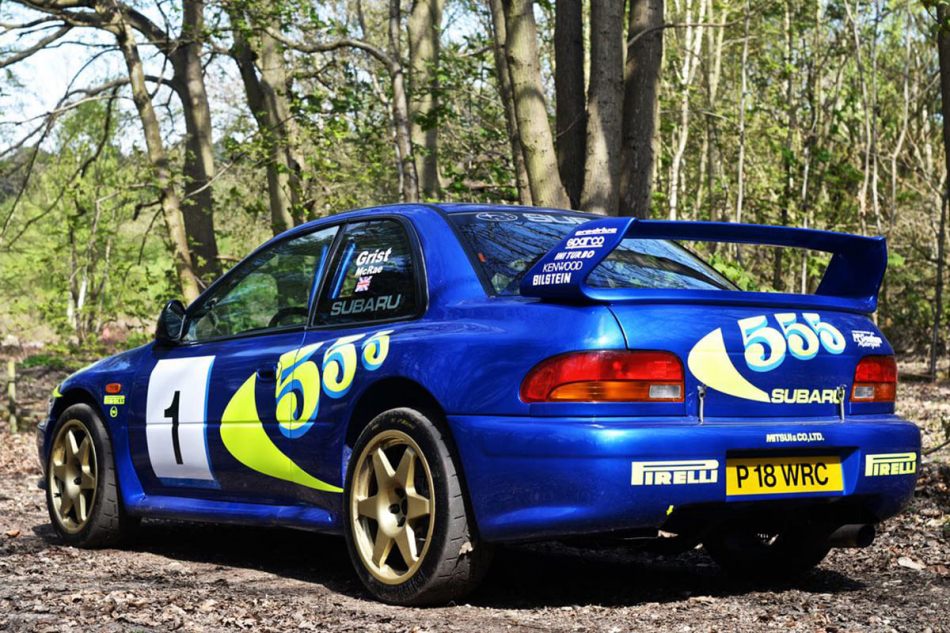
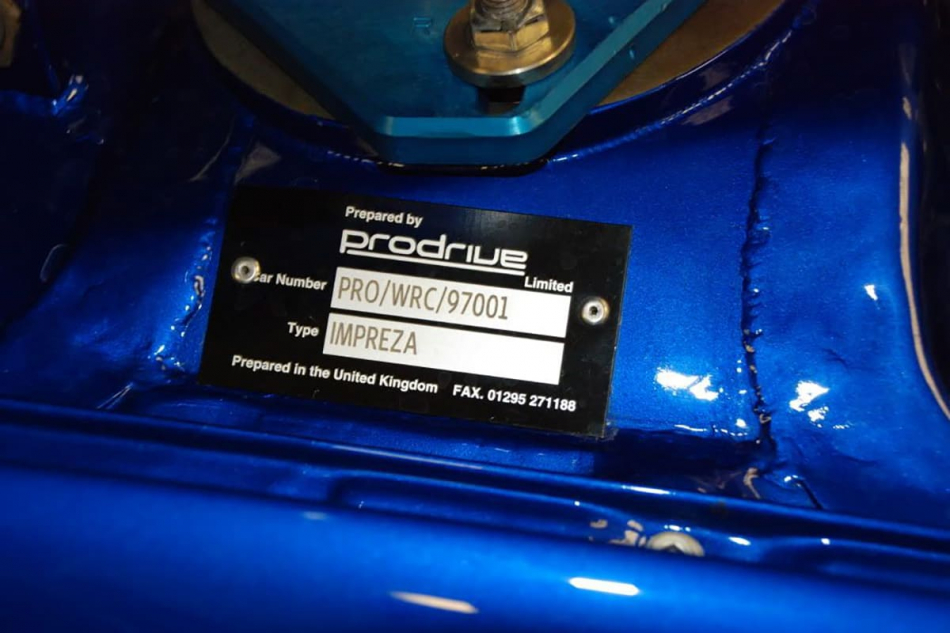
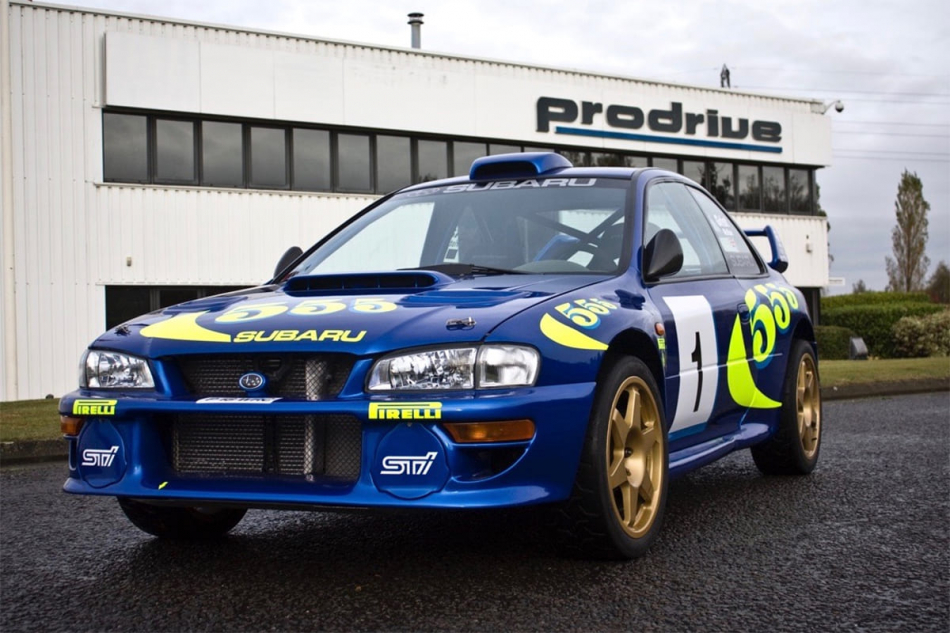
In the case of the Subaru Impreza WRC with chassis number 97.001 and state registration plate ” P18 WRC “, the auction house “H&H Classic Auctions” also relied on the information from the Czech website, but in vain – as a result, an entire year was lost from the history of the car!
It’s unlikely that this would have had much of an impact on the final cost of the car, but who knows – perhaps it would have been purchased by a Russian buyer and would have ended up in the (as yet defunct) “Russian Motorsport Museum”. Why? This is one of many interesting facts about this car…
Looking ahead, I will say that there were so many of these “interesting facts” in the history of this car that it would be enough for a dozen cars! Get out the popcorn!
The beginning of the journey
The first Subaru Impreza WRC (the so-called “Development prototype”) with chassis number 97.001 took a very long time to create – much longer than any subsequent similar car: it was created from February to October 1996. Where did such a period come from?
The answer is simple – it was created completely from scratch, so engineers and mechanics had to work hard:
February: Work began on the Subaru Impreza WRC engine and continued until the end of September.
March: Designer Peter Stevens begins creating the exterior of the future car. Work on the mock-up took twelve weeks, after which it was sent for wind tunnel testing.
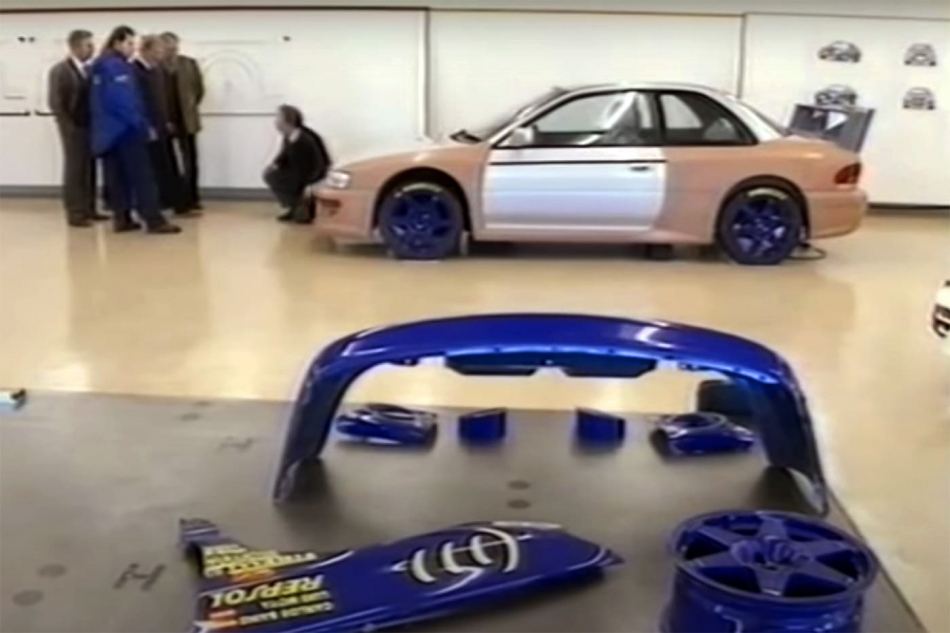
April: Trial installation of engine and other components into the body. Underhood work – eighteen weeks. Suspension development commenced – took sixteen weeks.
May and June: Installation and fitting of external body panels – eight weeks.
July and August: Interior work – installation of the safety frame, side protection elements, instrument panel. Total – ten weeks.
September: Final assembly of the car and preparation for the first runs – four weeks.
After the assembly was completed in October 1996, the newly assembled single Subaru Impreza WRC drove its first meters. For two weeks, the test team worked at the MIRA (Motor Industry Research Association) proving ground in Warwickshire. Engineers David Lapworth and Tom Hunt worked directly with the car.
On October 24, 1996, a significant event took place: Colin McRae took the new car with chassis number 97.001 for a spin at the same MIRA testing ground in order to “shake up” the car before sending it to the official presentation and debut tests in Spain.
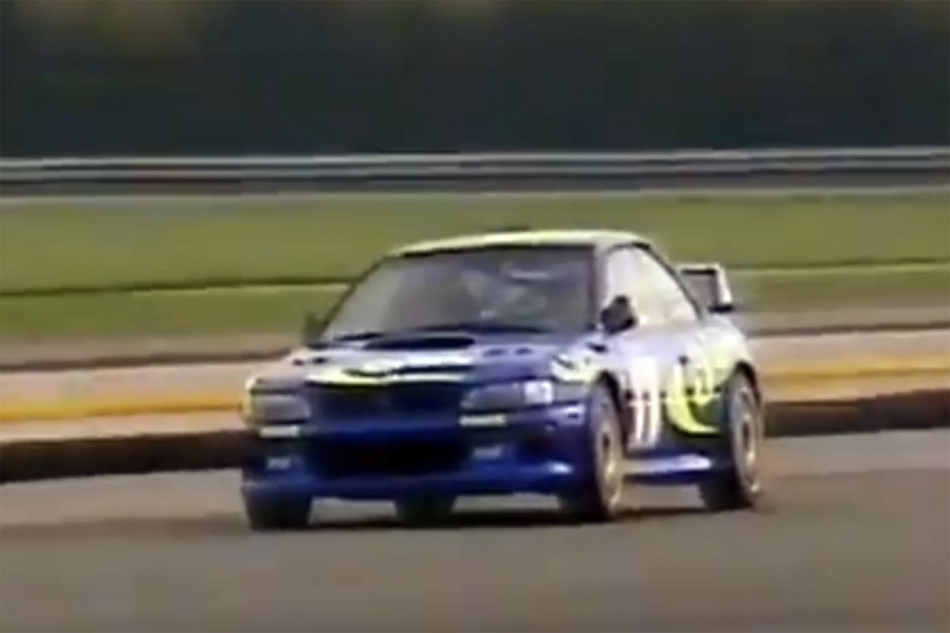
The Scotsman’s task also included assessing the handling of the new car and checking the operation of special devices designed to record various parameters during the upcoming tests: the operating temperature of the supercharged air, exhaust gases, engine parts, brake system components, etc. Subsequently, Prodrive analyzed the collected data and compared it with the parameters of the previous racing car – the Subaru Impreza 555 Group A.
The official first appearance of the Subaru Impreza WRC took place at a presentation held on November 2, 1996, before the start of the Rally Catalunya, the Spanish stage of the World Championship. For the duration of the presentation, the car was given the state number “WRC 97”.
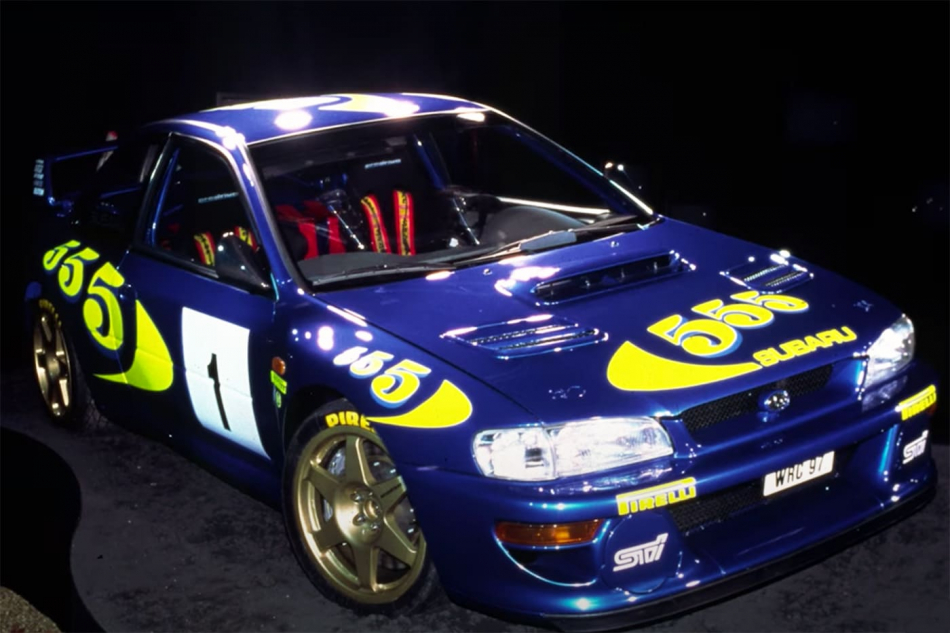
By the way, the Spanish race was won by Colin McRae, driving the A-group Subaru Impreza 555. And after the rally ended – five days after the presentation – the Scotsman conducted the first tests of the Impreza WRC prototype on the same Spanish special stages. Pay attention to the beautiful state numbers –
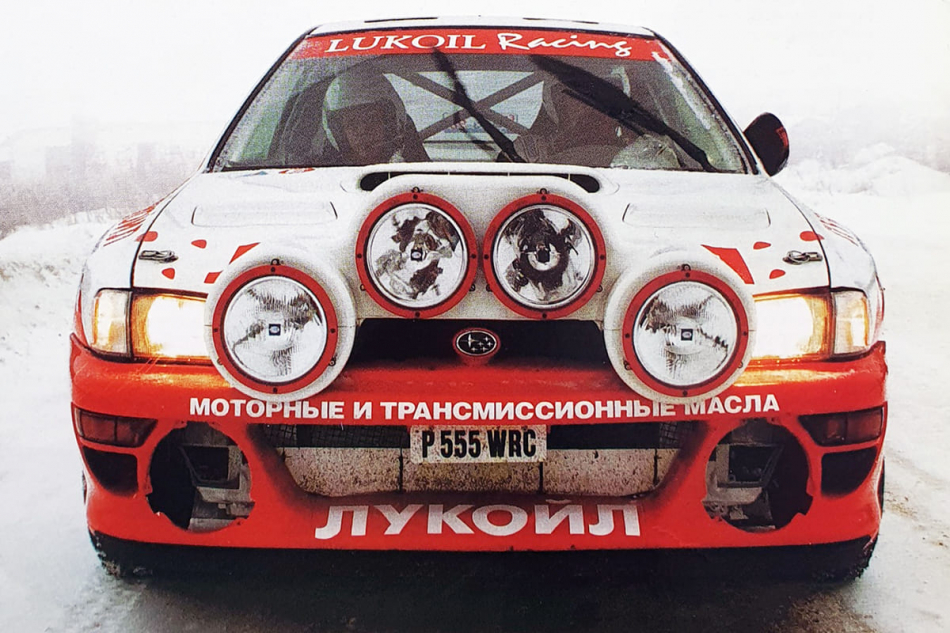
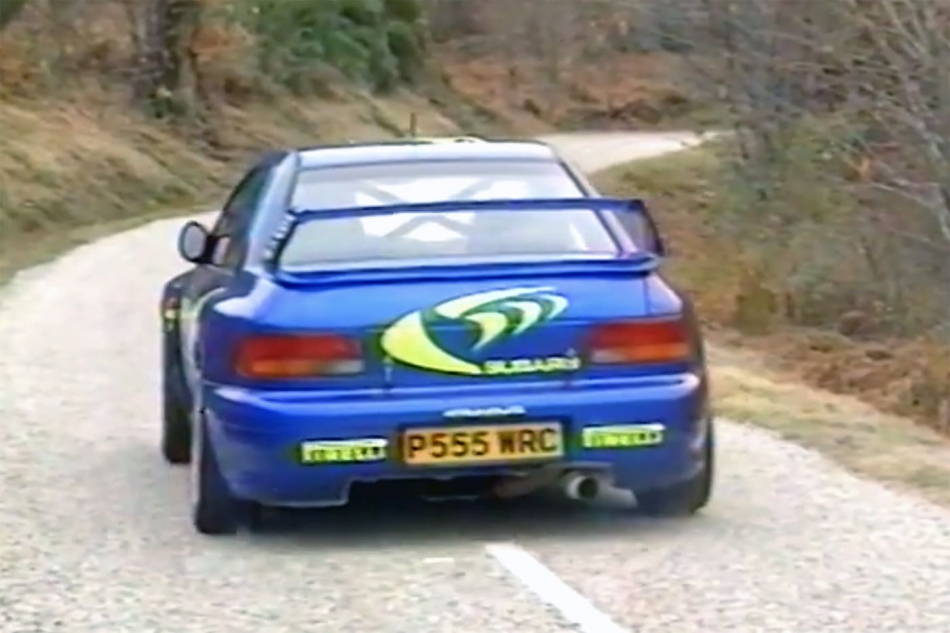
“ P555 WRC ” – this is the first official state number of the car with chassis number 97.001, remember this combination of letters and numbers:
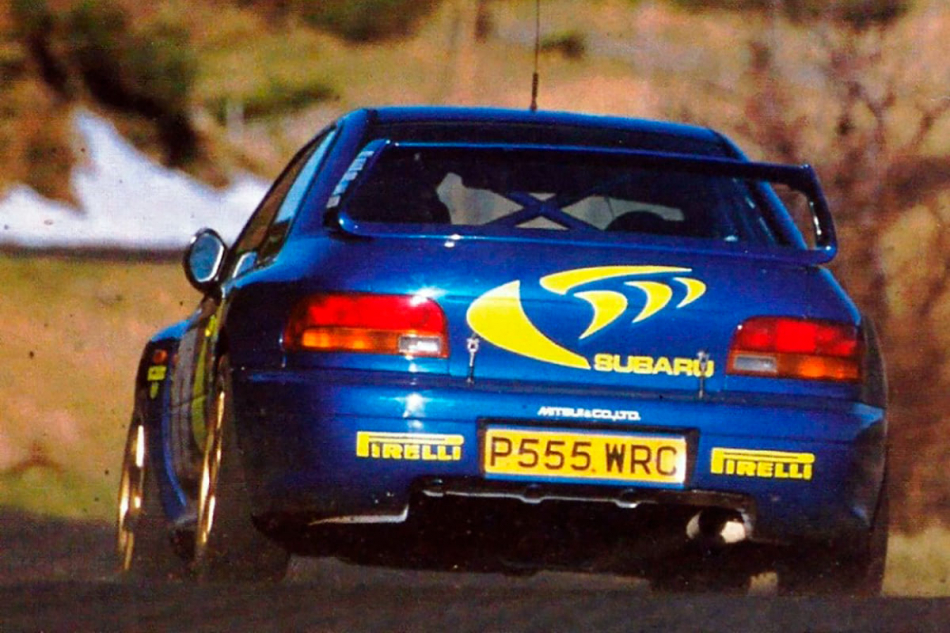
The tests took place on a three-kilometer section of the asphalt special stage “Col de Bracons”: the start is on a descent, a series of narrow twisting turns. Chris Patterson unexpectedly took the place in the right seat of the car – the contract with Derek Ringer had already ended, and with Nicky Grist had not yet begun. During the first test session, the crew drove more than half a thousand kilometers. In general, McRae liked the car, but he also expressed a number of comments.
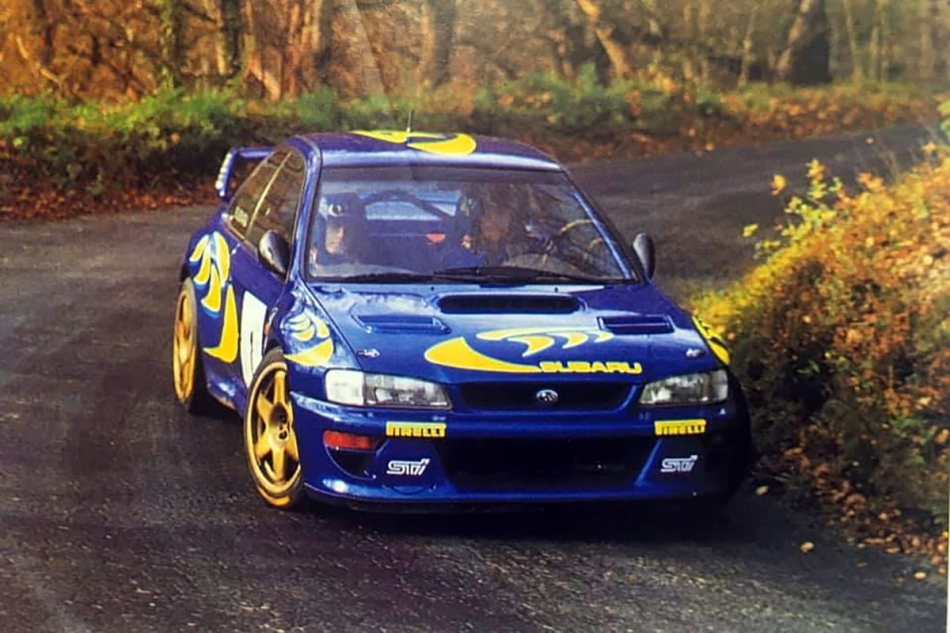
By the way, the crew of Piero Liatti and Fabrizia Pons also worked on the tests. And in addition to chassis 97.001, McRae and Liatti also used chassis 97.002
After Spain, chassis 97.001 was sent for a series of tests in a wind tunnel and a climate chamber. Then the car was sent for revision – the designers made a number of changes, including changing the position of the instrument panel and switches: during the first tests it was too far from the steering wheel.The left photo shows the car’s interior during the first tests, and the right photo shows a later version of the Subaru Impreza WRC:
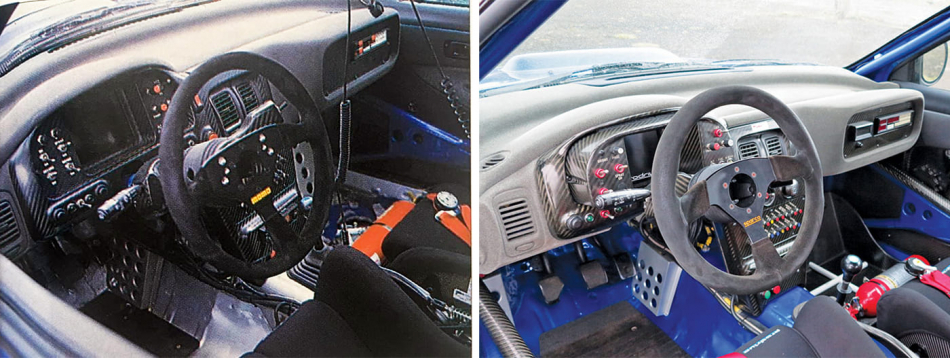
Do you know why the position of the switches was changed? The thing is that chassis 97.001 was a “test mule” – a kind of hodgepodge of new parts and elements borrowed from the A-group Subaru Impreza 555. The upper part of the instrument panel was the first to migrate from the old car to the new one.
But the driver’s position in the WRC car was different from that of the A-group Subaru. The driver sat further back in the car, and on the first version of the World Rally Car prototype, test drivers had a hard time reaching the switches. So Prodrive quickly changed the design, moving the unit.
At the beginning of 1997, the Subaru World Rally Team again used two test cars for testing before the Monte Carlo Rally – chassis 97.001 and 97.002 (chassis 001 is on the outside on supports, and chassis 97.002 is in the support van):
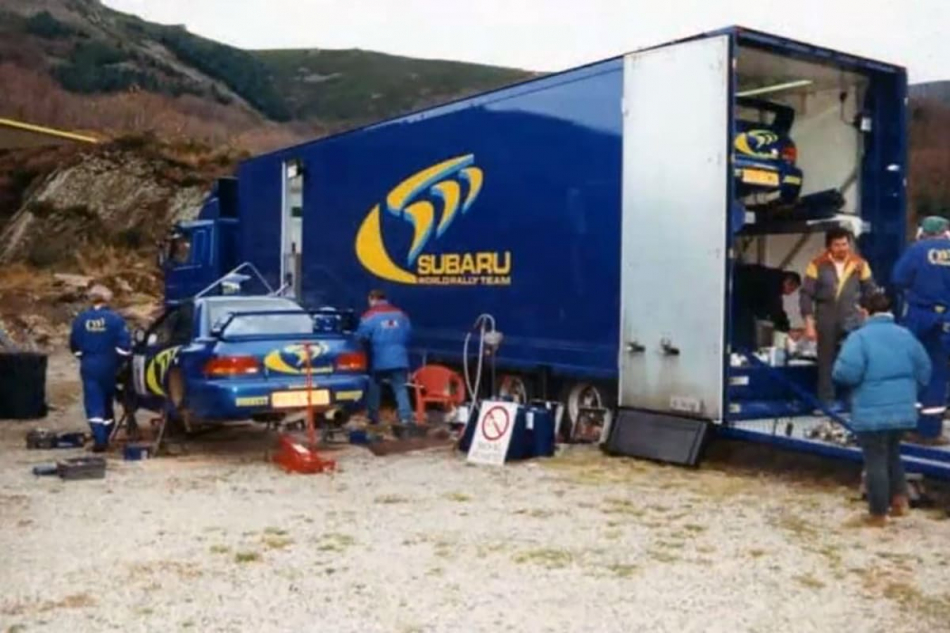
This was the last appearance of the very first Subaru Impreza WRC as a test car. The car was not used in further testing by the factory team.
The aforementioned auction house proudly stated in the description of the lot that this Subaru is “Colin McRae’s car”, but it has no racing history involving the Scotsman!
The first Subaru served its purpose as the first test prototype, during the tests the team saw a number of points requiring improvement and made them during the construction of the next cars – for this purpose the first chassis was created, which is called the “Development prototype”.
But what happened to that first car? In its presentation of the lot before the auction, Prodrive, the company that built the car, coyly avoided specifics, stating: “After testing , the Subaru was sold to a private customer .” To whom? Where? Doesn’t Prodrive know this?
A false trail and a hack job from Prodrive
But the auction house was clearly not satisfied with this runaround, so they took the information from the aforementioned Czech website and published the following: “In 1998, Gregoire de Mevius started and won the Boucles de Spa Alphonse Delettre rally in this car (chassis 001 ). This was the only start of this car in 1998.”
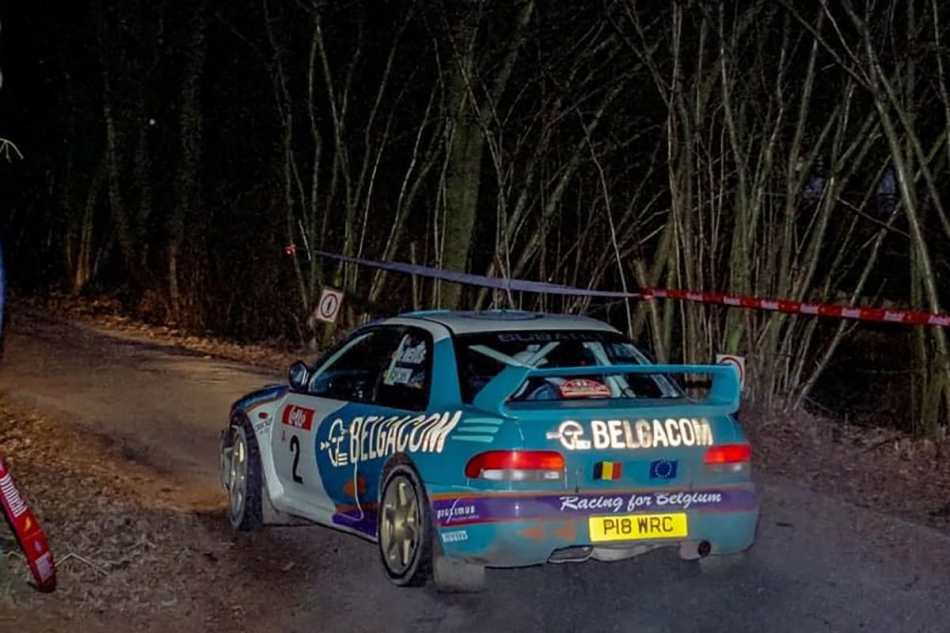
Well, rainy Belgian winter, rallying on a dirt surface. That (according to Prodrive and auction house «H&H Classic Auctions») was the debut of chassis 97.001 in rallying.
Like this, exactly?
Oh, how beautifully the sellers described this lot!
The current owner (seller) has asked Prodrive to confirm that this car is chassis 001. He has also commissioned Prodrive to restore the car to its original condition. The car has been restored using only genuine Subaru World Rally Team parts
, many of which are very difficult to find today.Acid analysis of the bodywork showed that the car had seen a lot during its racing career, but amazingly the original Prodrive bodywork was preserved and has been meticulously restored by the same team that built it in 1996.
The car was originally registered as P 555 WRC but became known as P18WRC .
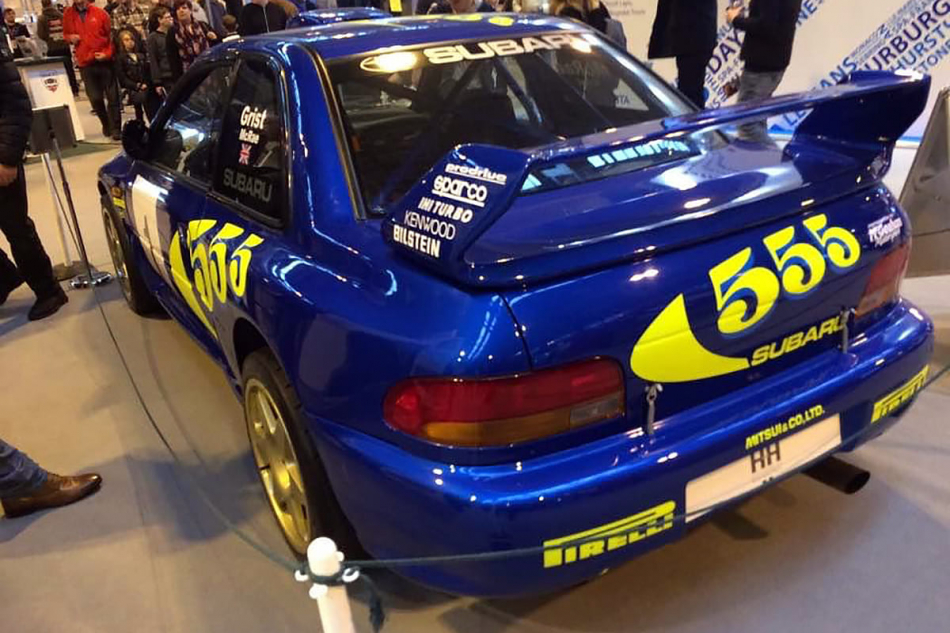
Please remember these pompous statements – especially about the original 1996 body. I promise you – at the end of our investigation you will laugh!
The auction took place. The Subaru was sold for $293,401, more than the H&H Classics experts had predicted.
And everything would be fine, but the car was restored terribly! The seller asked Prodrive to ” restore the car to its original condition “? The British clearly failed – even a superficial inspection reveals the wrong roof (with a central air intake, which was not there during McRae’s first tests on chassis 97.001), the wrong bumper (the central air intake is of a different shape from the original), the wrong instrument panel and switches, and so on.
You will say: ” Why are you so picky? It was restored not to match the first version of the Impreza WRC , but to match a later version of the body. What’s wrong with that? “
Yes, but this was only one of many lies! Even the aforementioned debut of Gregoire de Mevius at the rally “Boucles de Spa Alphonse Delettre” in Belgium turned out to be a lie – there was another car there. And where was chassis 97.001 at that time?
Where, where… Have you guessed yet?
The real debut of the first ” World Rally Car “
January 17, 1998.
Russia, Sverdlovsk region, city of Pervouralsk.
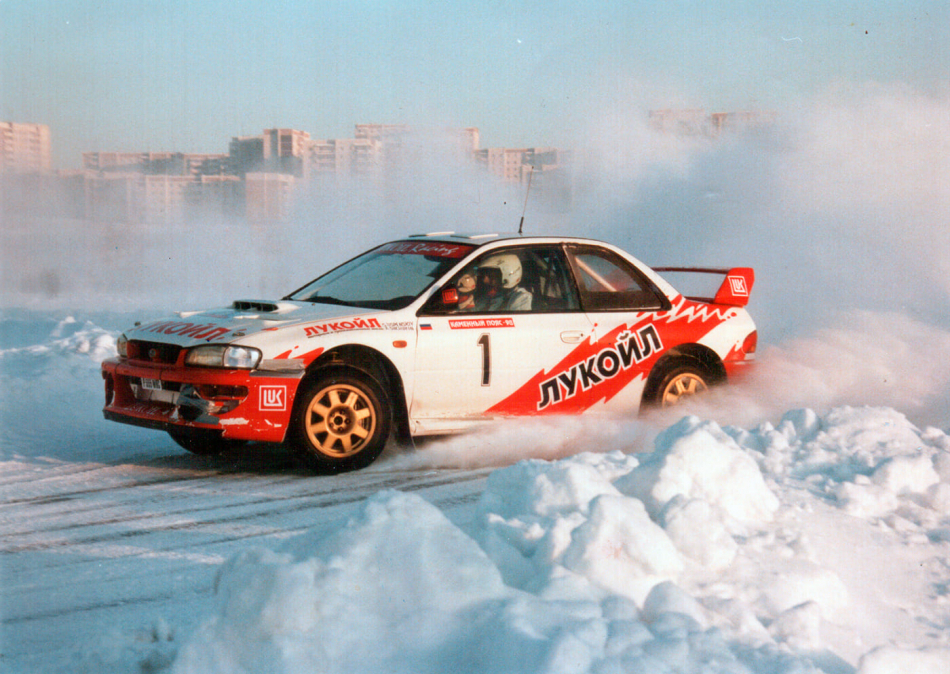
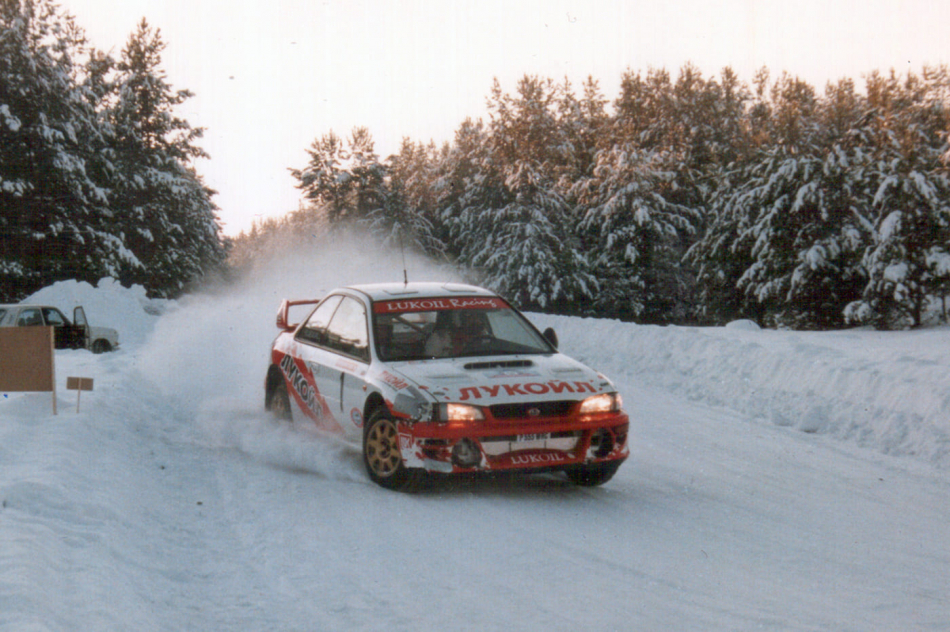
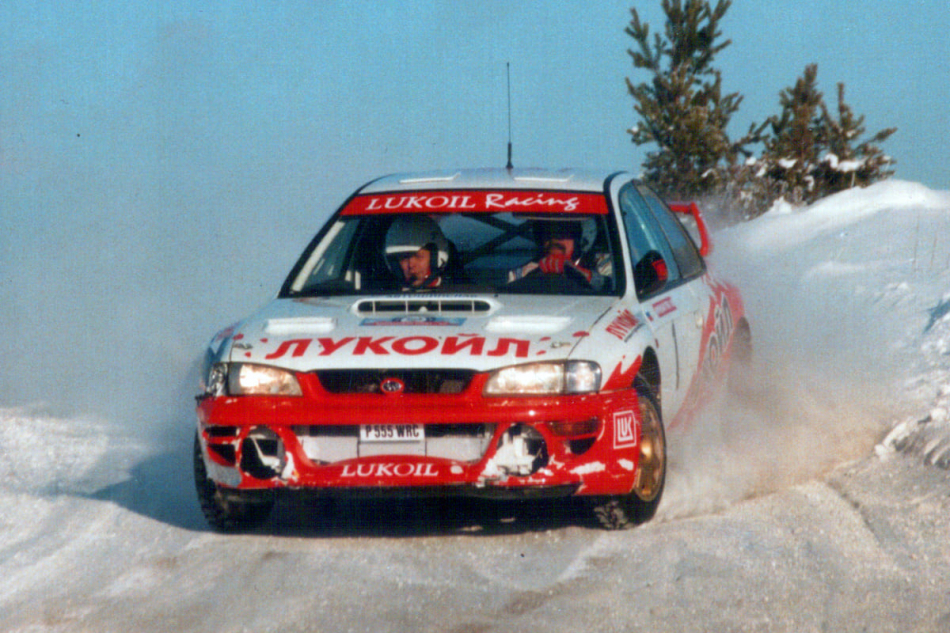
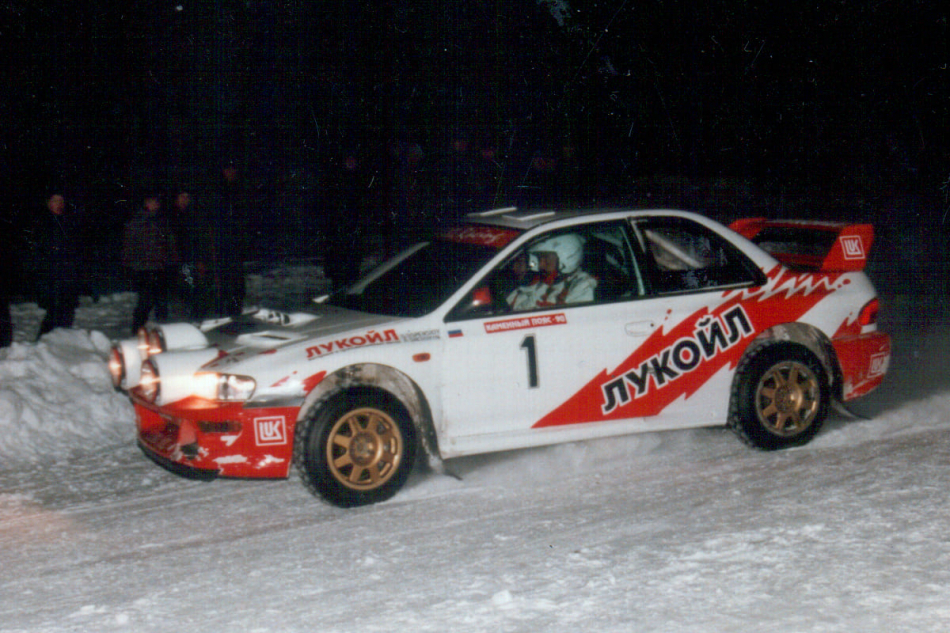
A typical winter for these places – outside the frost is minus twenty, snowdrifts are waist-deep. It was here that the opening stage of the 1998 Russian Championship took place – the rally “Stone Belt”. The crew of Sergey Uspensky and Alexey Shchukin took to the start of the race under number 1. They set off to the race in a red and white Subaru Impreza WRC with the state number ” P555 WRC “ .
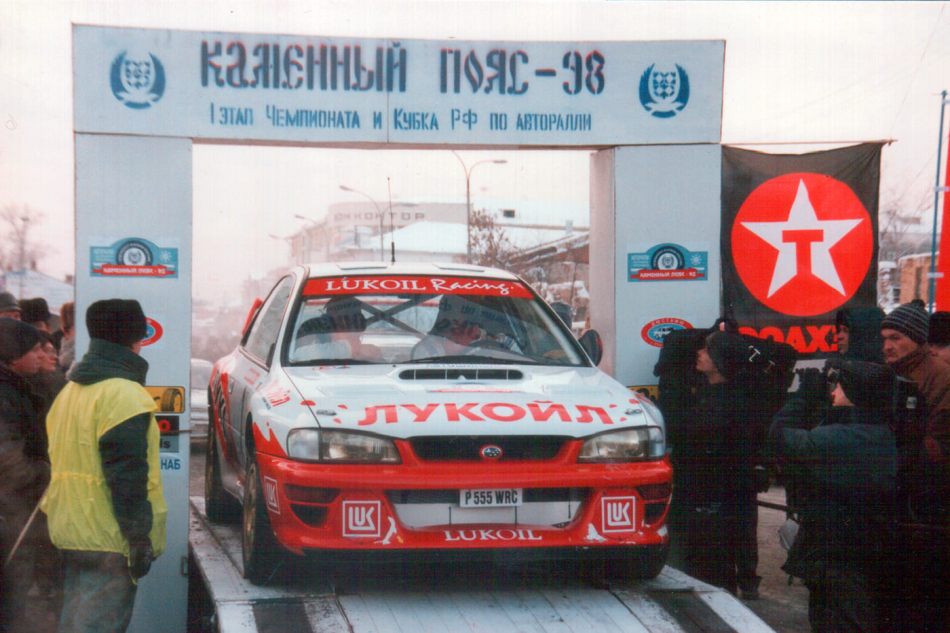
The attentive reader will now say: “Stop! I’ve seen this number mentioned somewhere before .” Yes, yes! The same number was on Colin McRae’s Subaru during the tests of the very first chassis. But it’s not just “the same number”…
This is the same car! The racing debut of the world’s first car of the “World Rally Car” category took place on the territory of our country.
For some reason, this information is a secret for foreign journalists, fans and specialists, although in Russian newspapers and magazines back in 1998 they wrote: “ Sergey Uspensky is racing on the very first Subaru Impreza WRC chassis with number 001. ”
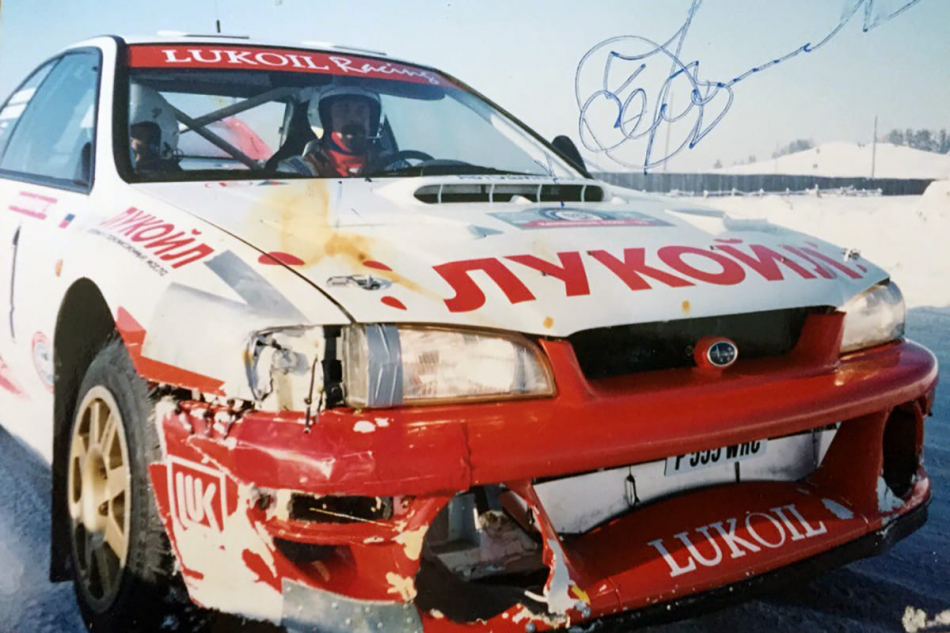
In the late 90s of the last century, Russian rallying was enjoying such a fertile time that brand new cars of the “World Rally Car” category appeared on the tracks – having just debuted in the World Rally Championship. Therefore, it is not surprising that Uspensky became the third “private” client of Prodrive after Frederic Dor and Bruno Thiry, who managed to get a Subaru Impreza WRC at his disposal.
To give you a better idea of how cool this was, in 1997 there were only five drivers racing this car in the world: Colin McRae, Piero Liatti, Kenneth Eriksson, Bruno Thiry and Frederic Dor. So in 1998, Sergei Uspensky became only the sixth driver of this car on the entire planet!
Even the approximate cost of the car is known – according to two sources, it was between 300 and 330 thousand US dollars.
Six rallies and five victories – this car has driven in just six stages of the Russian championship, and Sergey Uspensky won five of them.
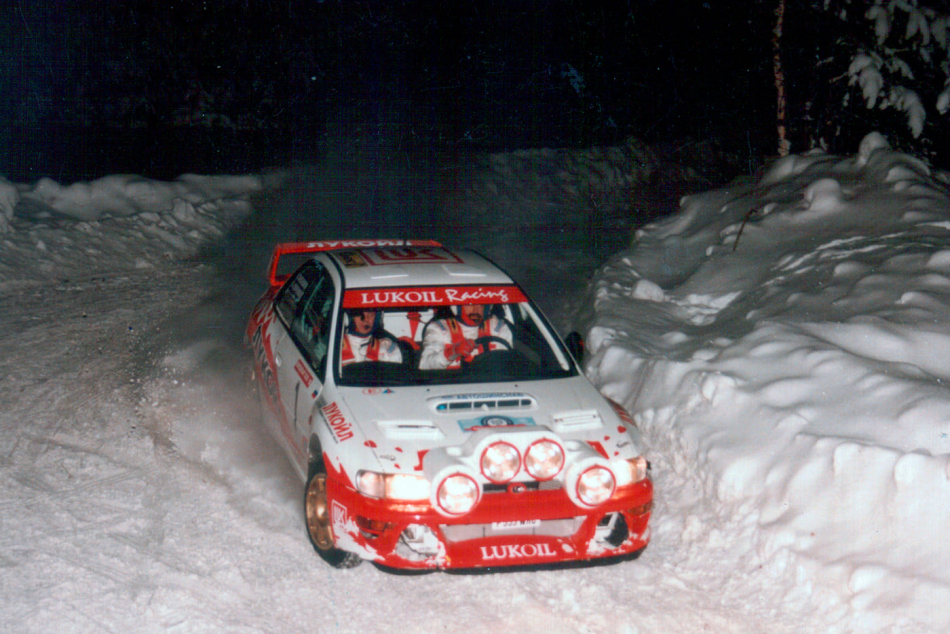
By the way, on February 11, 1998, an epochal event took place – the Subaru Impreza WRC was registered in Moscow and received Russian state registration plates. More precisely, one number – it hung on the rear bumper: “ M267TX77 RUS ” . And it was with this state registration plate that Sergei Uspensky’s car entered the third stage of the national championship: the “Bear” rally – at the first two stages of the series, the car sported British state registration plates “P555 WRC”.
Interestingly, according to the documents, the car officially had a two-liter naturally aspirated engine with a capacity of 115 hp. But in reality, of course, this was not so – it had a turbo engine with the number 97PD06 (1997 – year of production, PD – Prodrive, 06 – serial number of the power unit) and a capacity of more than three hundred horsepower.
Stage One. Rally “Stone Belt”
The opening stage of the 1998 Russian Rally Championship – the Stone Belt rally – brought together a modest line-up, with only twenty-five crews taking to the start. And it was here in Pervouralsk that Sergei Uspensky made his debut as part of Lukoil Racing behind the wheel of a brand new Subaru Impreza WRC.
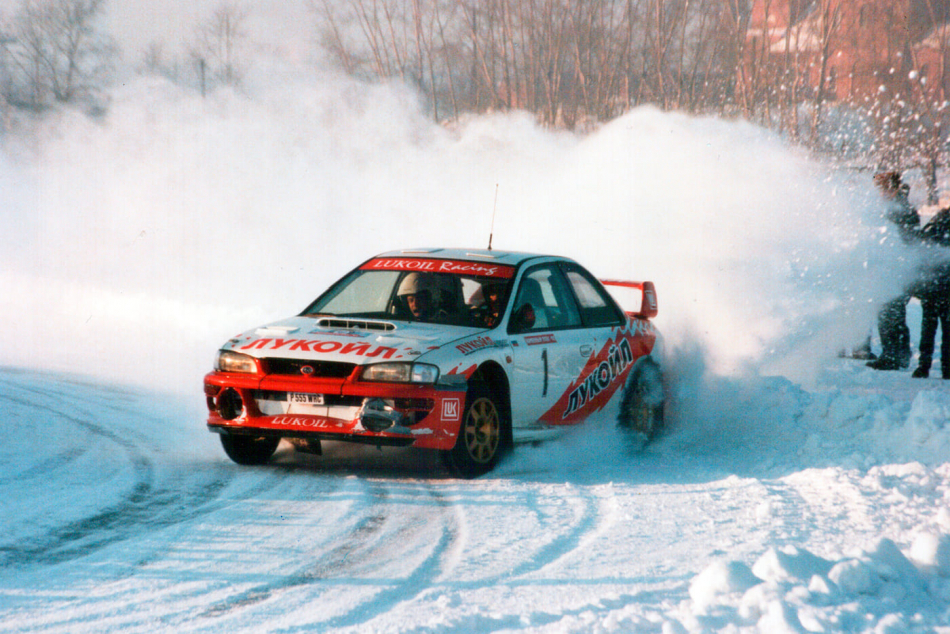
Sergey Baldykov moved from Gazprom Rally Team to Aleksandrov Rally in the off-season and switched from a Ford Escort RS Cosworth to an old Subaru Legacy, which was previously driven by the same Uspensky (we will talk about this car in one of our next articles). Aleksandr Artemenko competed in a factory VAZ “ten” with a two-liter Opel engine, and the group of local favorites was headed by the prize winner of the 1996 and 1997 Russian rally championships Vadim Novikov.
But as the race progressed, it quickly became clear that fortune had turned away from the rivals who were trying to challenge Sergey Uspensky’s Subaru. Baldykov was hanging on a snowdrift for almost fifteen minutes on the very first special stage, laid on the ice of Lake Shartash. And no matter how hard he tried, he was unable to catch up with the “world rally car” in the aging Legacy.
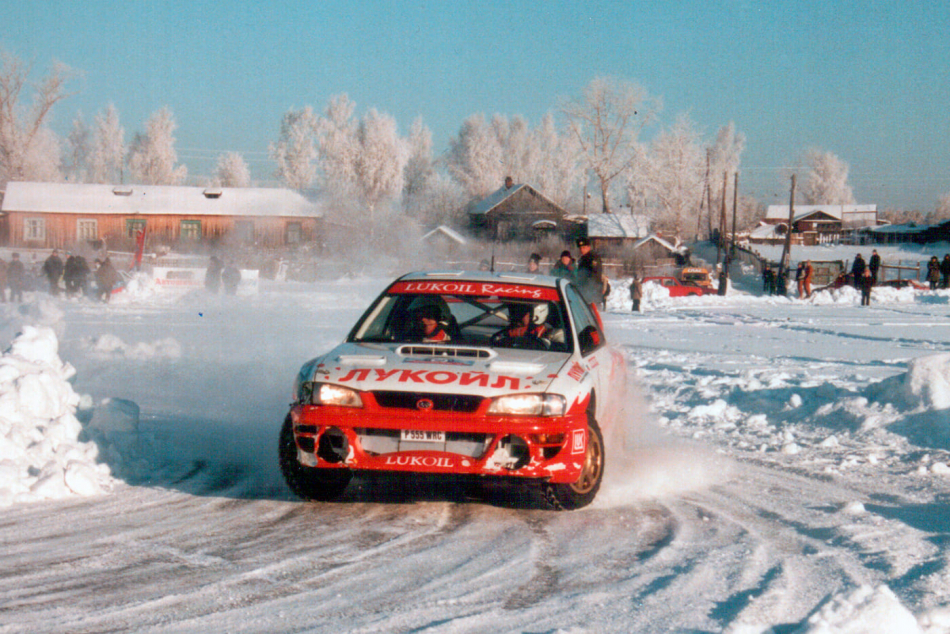
As for Novikov’s N-group Mitsubishi and Artemenko’s single-drive Lada, they simply lacked the speed to try to put up a fight with Uspensky. In the end, Sergey won all seventeen special stages and took a confident victory.
Results of the rally “Stone Belt 1998”:
1. Sergei Uspensky / Alexey Shchukin
2. Vadim Novikov / Evgeny Novikov +11.38
3. Alexander Artemenko / Anatoly Denisov +12.54
4. Sergey Baldykov / Anton Zinoviev +19.16
5. Alexander Chistyakov / Yuri Maltsev +20.31
Stage 2. Rally ” ESSO- Frost”
Unlike the first stage, sixty-seven crews already took to the start of the race in Moscow. In addition to Sergey Uspensky’s Subaru Impreza WRC, another “world rally car” took part in the rally – Estonian Dmitry Myalson piloted a Ford Escort WRC, converted from an A-group by the Mike Little Preparations team. Sergey Baldykov now had a much more formidable weapon – he finally received an A-group Subaru Impreza 555 from Great Britain (material about this car is being prepared for publication).
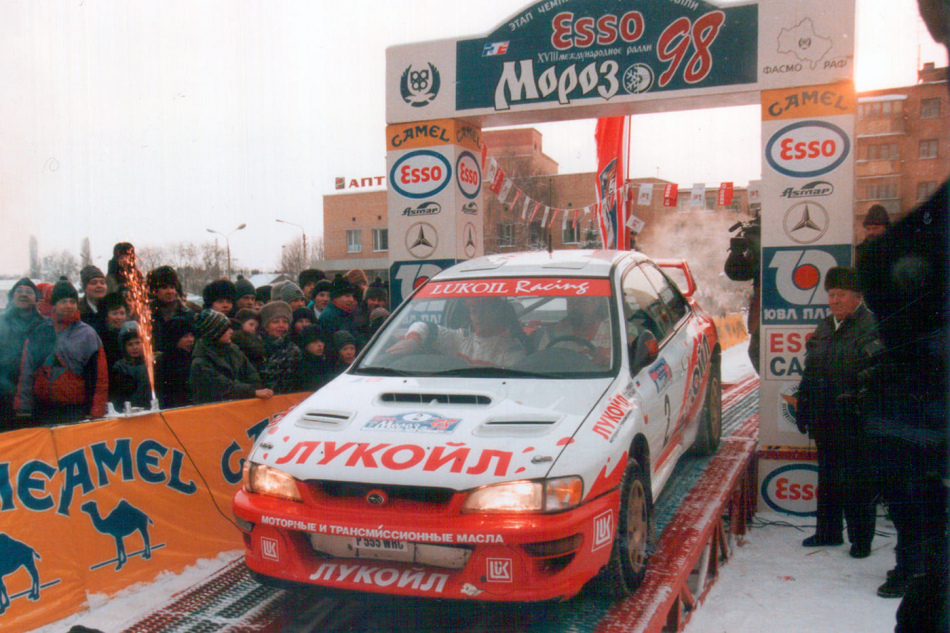
The winner of “Moroz” in 1997 Silvo Viitanen again competed in the A-group Ford Escort RS Cosworth. The AVTOVAZ factory team was represented by two “tens” driven by Viktor Shkolny and Alexander Artemenko. And Vladimir Turov and Stanislav Gryazin brought a pair of Lancia Delta HF Integrale to the start.
The second stage also took place in freezing weather – the brand new “British” Subaru had to get used to Russian realities right away. And before the start of the very first special stage of the race, there was almost a misfire – when approaching the start line of the opening stage “Zyuzino”, Uspensky’s Impreza WRC stalled! The crew had exactly three minutes to solve the problem. Having quickly analyzed the situation, the pilot and navigator came to the conclusion that the remote ground button of the car’s electrical circuit had broken.
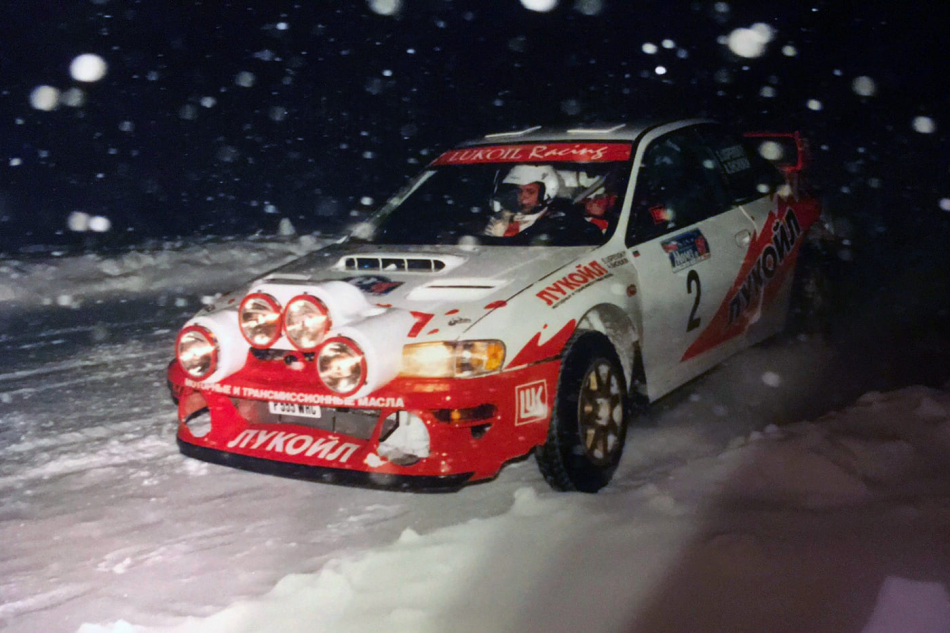
The Subaru also had a backup mechanical battery switch, which was located behind the pilot’s seat in a special container with the battery. Navigator Alexey Shchukin had to unfasten his seat belts and reach behind the seat to open the container and turn the switch.
The engine started, the crew took off and the further course of the fight showed that, with the exception of an unfortunate incident at the start, the car and crew were ready for everything! Uspensky showed the best time on almost all special stages – only on stage number six “Lake-1” did one of his rivals show the best time.
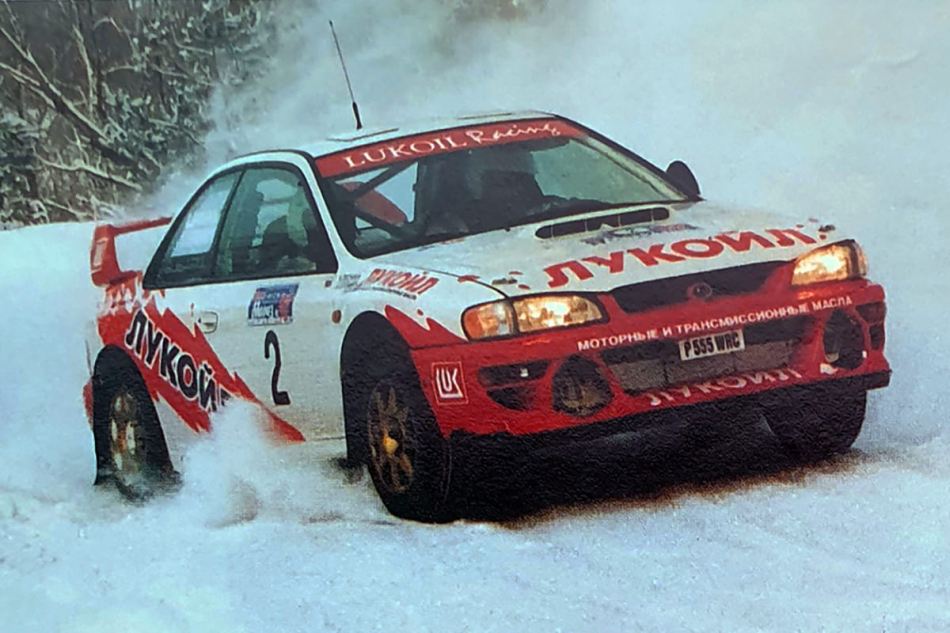
Well, the rivals themselves one after another “helped” the leader – Sergey Baldykov got his A-group Subaru into a snowdrift and retired because of it, his fate was repeated by Alexander Artemenko, Dmitry Myalson, Vadim Novikov. And Viitanen retired because of a front drive failure.
As a result, the results of the race were quite unexpected. Uspensky won a confident victory, and the podium was shared with him by Gennady Denisov, who was driving an N-group Mitsubishi, and Viktor Shkolny, who was piloting a Lada.
Results of the rally “ESSO-Frost 1998”:
1. Sergei Uspensky / Alexey Shchukin
2. Gennady Denisov / Vladislav Strebkov +7.48
3. Victor Shkolny / Sergey Talantsev +18.45
4. Mikhail Danilochkin / Alexander Troshkin +20.39
5. Arkady Kuznetsov / Vasily Kholodkov +22.00
Stage 3. Rally “Bear”
The third stage of the championship – the Yaroslavl rally “Bear” – was marked for “LUKOIL’s” Subaru Impreza WRC by two events. Firstly, the car started for the first time with Russian state numbers “M267TX77RUS”. And secondly, for the first time since the appearance of this car in the Russian championship, it did not reach the finish line – the crew was forced to retire! What happened?
The starting day of the race was cancelled due to weather conditions and the first special stage to take place was supposed to be the eighth stage, which was laid on the ice of Lake Klimovskoye. Sergey Uspensky started first and everything was going well, but at some point his Subaru flew off the track into virgin snow. After which the car returned to the track in reverse, and at the very finish line – it was located right behind a sharp turn – the situation repeated itself!
https://www.youtube.com/embed/KedmSUa_P6k?si=icqMDNTLQEgW6MMU
The Subaru once again breaks through the snow parapet and flies into the field, cutting off the turn and driving past the finish line. Thus, the crew was counted as not passing the special stage distance. Sergey Uspensky handed in the control card and this was the end of his participation in the “Bear” rally – realizing that the result of this high-speed section would still be removed, Uspensky himself handed in the control card, refusing to further participate in the race.
The crash on the very first special stage was the reason why there is not a single photo of the Lukoil Subaru on the Medved rally track in the archives! Therefore, we can only publish a screenshot from the video…
After Uspensky’s withdrawal, the battle for leadership was between Semyon Barulin, Vadim Novikov, Sergey Baldykov and Gennady Denisov. And the winner in this battle was Baldykov, who left Novikov and Denisov behind.
Results of the rally “Bear-1998”:
1. Sergey Baldykov / Anton Zinoviev
2. Vadim Novikov / Evgeny Novikov +1.38
3. Gennady Denisov / Viktor Strebkov +2.34
4. Victor Shkolny / Sergey Talantsev +3.43
5. Alexander Artemenko / Anatoly Denisov +5.31
Break between winter and summer stages
The Medved rally concluded the winter part of the Russian Rally Championship – it finished on February 22. The next stage – the Sestroretsk rally – was held only three months later, on May 23-24. How to use this time? The Lukoil Racing rally team spent this peculiar vacation like this…
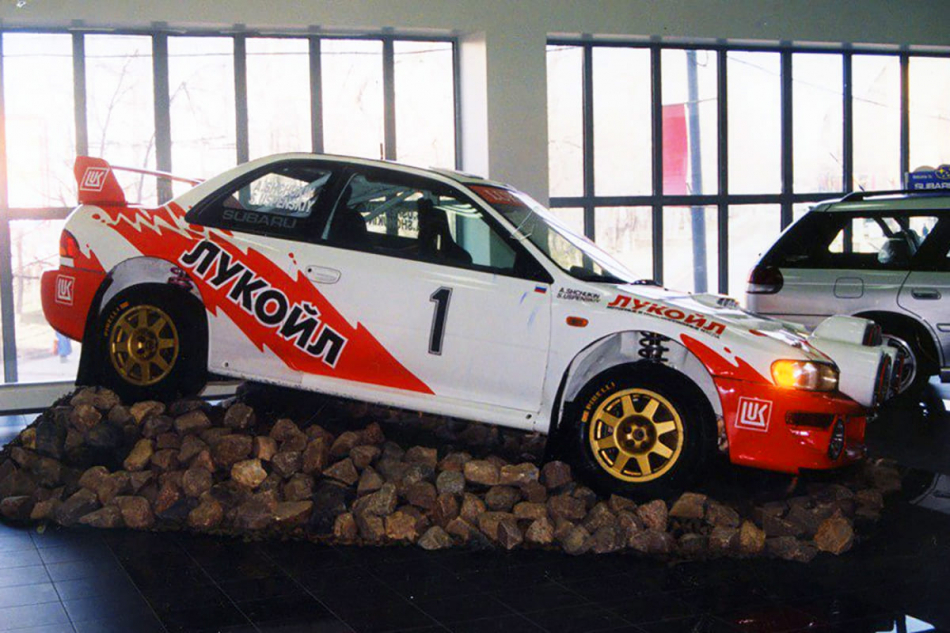
In early March, the Subaru Impreza WRC was put on public display at the car showroom of the U-Service+ company, owned by Sergei Uspensky:
And at the end of April – beginning of May the car went to Great Britain – specialists of the company “Prodrive” carried out the planned maintenance of the car, which cost about eighty thousand US dollars. In the photo – Subaru at the “Prodrive” testing ground:
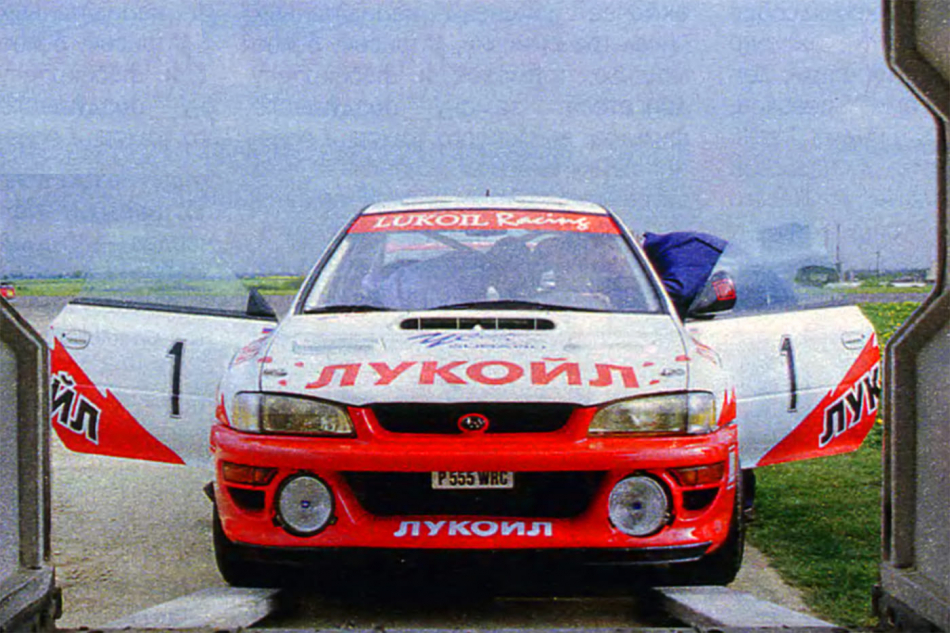
According to Prodrive, all the spherical joints of the suspension and steering had to be replaced, as well as many seals – all of which suffered from the road salt that was sprinkled on Russian roads. In addition, the pump that ensured the circulation of oil in the gearbox circuit and the hydraulic differential lock had “floated”.
Stage 4. Rally “Sestroretsk”
At the start of the fourth stage of the Russian Rally Championship, another car of the World Rally Car category was finally supposed to appear – Sergey Baldykov received a Subaru Impreza WRC at his disposal a week before the Sestroretsk rally and debuted on it in Bulgaria at the Albena rally. The Bulgarian debut was quite successful – third place. And after the race in Bulgaria, the Aleksandrov Rally team declared the new car for the stage of the Russian championship.
However, the car did not arrive in Sestroretsk – allegedly there was no suitable petrol or tyres for it, and the brake discs also required replacement. But we will also tell about this car in one of the following articles…
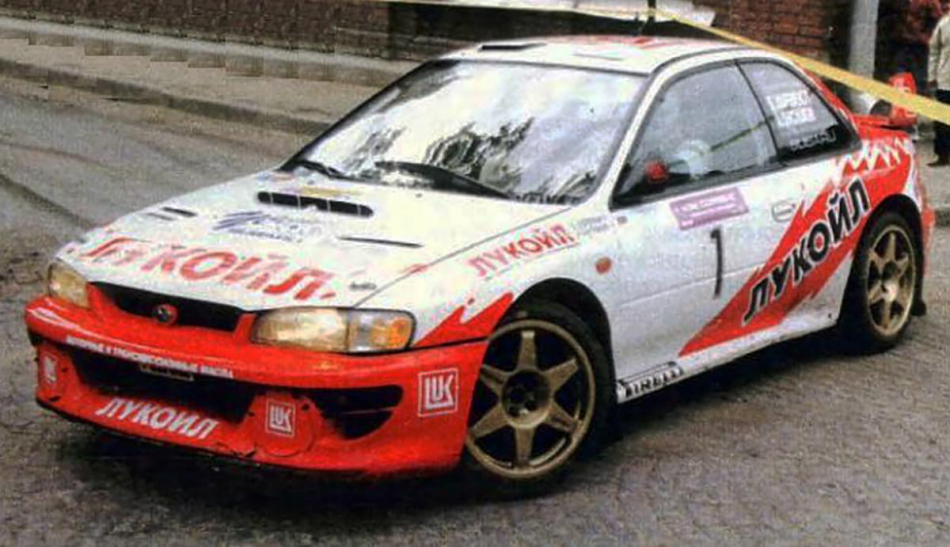
The crews of the AVTOVAZ factory team also did not come out to the start. So the most serious (in terms of technology) rivals of Sergey Uspensky and his Subaru Impreza WRC were the three Lancia Delta HF Integrale of Sergey Gerasimov, Viktor Balakan and Stanislav Gryazin. However, at the finish line, after the name Uspensky, there were completely different names in the top three.
Sergey Uspensky brought his Subaru to the start of an asphalt rally for the first time. Despite problems in the form of a lack of rain tires, Uspensky managed to get out of the situation and win his third victory of the season. Gennady Denisov and Arkady Kuznetsov finished behind him.
Results of the rally “Sestroretsk-1998”:
1. Sergei Uspensky / Alexey Shchukin
2. Gennady Denisov / Vladislav Strebkov
3. Arkady Kuznetsov / Ekaterina German
4. Alexander Alexandrov / Safoniy Lotko
5. Sergey Gerasimov / Alexey Khokhlov
Stage 5. Rally “Gukovo”
In the steppes near Rostov-on-Don from June 5 to 7, 1998, Sergei Uspensky and his Subaru Impreza WRC caused a real rout – the Muscovite won all the special stages of the fifth stage of the Russian Rally Championship and became the winner of the Gukovo rally. The gap between Semyon Barulin, who finished second, was 6 minutes 19 seconds. Gennady Denisov took third place – he lost to Uspensky by eight minutes.
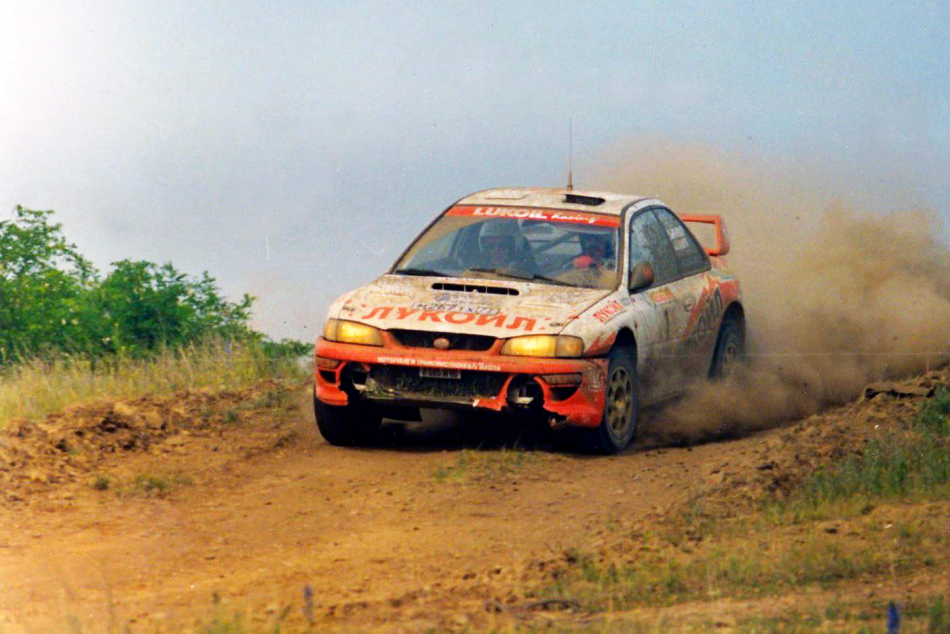
It is curious that at the Gukovo rally Uspensky competed for himself, and not for the Lukoil Racing team. The fact is that the team… lost its license! And so Sergey had to submit an application himself. And the funniest thing is that the story of the license revocation had nothing to do with the rally – it all happened because of the fight between two circuit championships for a place in the sun!
In 1998, Russia hosted two major circuit racing championships at once: the Russian Championship held under the auspices of the Russian Automobile Federation (RAF) and the National Racing Series ASPAS (the so-called NGSA). Of course, disagreements arose between the championship organizers, and as a result, the teams split into two camps: some decided to participate in the national championship, and some in the NGSA.
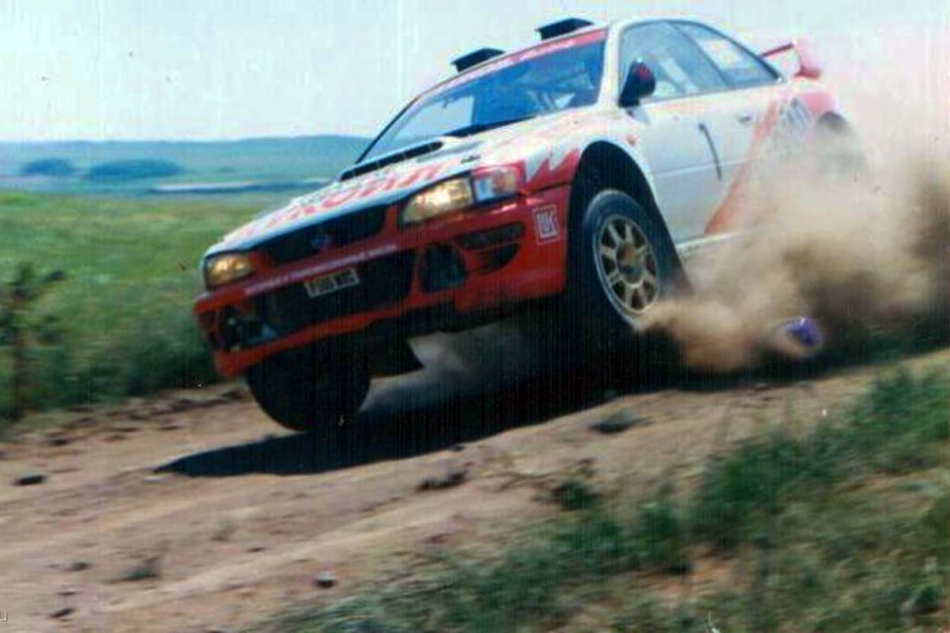
And on the last weekend of May, the stages of the two series overlapped in terms of dates. RAF made a blunt decision and declared the NGSA stage a “prohibited competition”. But the race still took place, after which the RAF Council on Sports disqualified all the racers and teams (and that’s two dozen pilots and four teams) that participated in the NGSA stage. This list also included Lukoil Racing, which was deprived of its license. And with it, the rally team with the same name!
Results of the rally “Gukovo-1998”:
1. Sergei Uspensky / Alexey Shchukin
2. Semyon Barulin / Alexey Popov +6.19
3. Gennady Denisov / Vladislav Strebkov +8.02
4. Nikolay Trepykhalin / Alexander Tsvetkov +8.45
5. Alexander Artemenko / Anatoly Denisov +9.08
Stage 7. Rally “President”
The last race for Lukoil’s Subaru Impreza WRC was the President rally, which was held in the Yaroslavl region on July 18-19, 1998. The Lukoil Racing team missed the White Nights rally, which was held before the President.
It was at the Yaroslavl stage that Sergey Uspensky and Alexey Shchukin became the 1998 Russian Rally Champions, while… flying off the track twice during the race. Moreover, if on the first (asphalt) special stage it was just a fly-off at the very first turn of the race (!!!), which led to a loss of about twenty seconds, then on the tenth (dirt) stage the car completely flipped over!
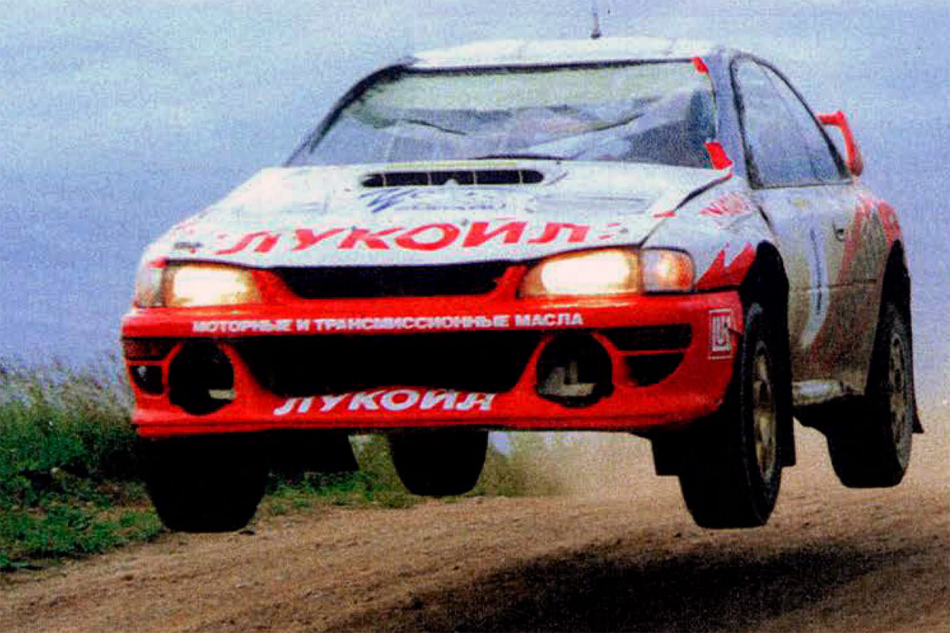
But the spectators helped the racers get the car back on its wheels, and the Muscovites, who had already taken the lead in the race on the fourth special stage, continued the fight, winning the final victory and beating Viktor Shkolny, who came in second, by two and a half minutes. Gennady Denisov took third place at the finish of the race.
According to the results of the championship, Sergei Uspensky scored exactly 100 points, Gennady Denisov, who came in second, scored 69 points, and Viktor Shkolny scored 63 points.
By the way, at the President rally, Uspensky again competed for Lukoil Racing – the team got its license back and the crew and team performed in the last race as originally planned.
Results of the rally “President-1998”:
1. Sergei Uspensky / Alexey Shchukin
2. Viktor Shkolny / Sergey Talantsev +2.29
3. Gennady Denisov / Vladislav Strebkov +2.47
4. Andrey Panchenko / Sergey Tokarev
5. Vadim Novikov / Evgeny Novikov
Navigator: Shchukin
In Russia, two people managed to drive the red-and-white “Lukoil” Subaru Impreza WRC in 1998 – pilot Sergey Uspensky and navigator Alexey Shchukin. We managed to find one of the crew members and ask a few questions about that very chassis 97.001:
Matador.tech: Were there any tests of the car before the first start and between races?
Alexey Shchukin: There were no tests. However, an engineer from Prodrive came to all the races involving this car . It was mainly Mark Trofimov, who was also involved in the Lukoil circuit program.
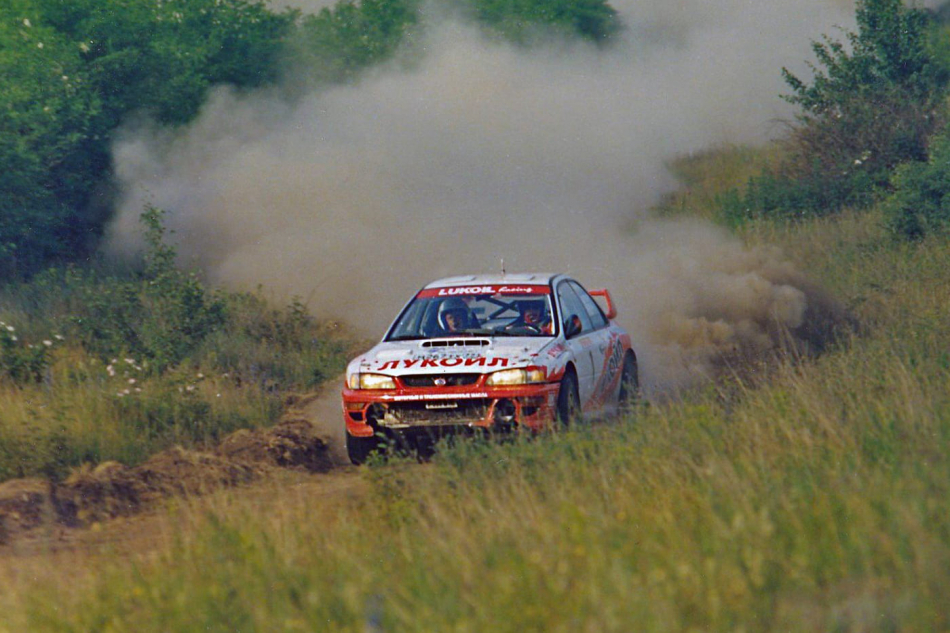
Matador.tech: Did the cold weather cause any problems during the first race?
Alexey Shchukin: I don’t remember any problems with the car’s operation in cold weather. We simply sealed part of the radiator as standard and everything was OK. The main problem was cold starting, but it was also solved in a standard way.
Matador.tech: Your crew had several accidents with this car. Was its body changed or did it remain unchanged until the sale?
Alexey Shchukin: No, the body was not changed. In general, Uspensky had a great “tin shop”. And to be honest, we did not hit it much – mostly only the attachments. The most serious accident was the “roof” in Rostov, but even there the frame remained undamaged.
Matador.tech: Why, how and when was the car sold?
Alexey Shchukin: The ” Lukoil” car was bought and belonged to Lukoil. The company sold it in connection with the end of cooperation with Uspensky and the closure of the project. The reason for the closure was some murky story with the distribution of powers and finances. I don’t remember the details…
Engineer: Trofimov
After a conversation with Alexey Shchukin, in which he mentioned Mark Trofimov – a British engineer with a Russian surname – we went looking for him and found him on Facebook! Mark also said a few words about that period of his work in Russia – as he personally remembers it.
Mark Trofimov: Yes, after each rally in Russia, a lot of interesting things happened. But in the UK we have a phrase: “What happens far away, stays far away”. I enjoyed working with the team. Sergey Uspensky showed me what a Russian banya was – it belonged to some Russian mafioso. I remember Russian vodka and smoked fish…
From a sporting point of view, we had a successful season. Sergey Uspensky made only one mistake, when at the end of one of the special stages, due to understeer, the car was pulled into the snow. It somehow continued moving along the snow field, but Sergey turned right and arrived at the finish line from the other side. For this, he was disqualified.
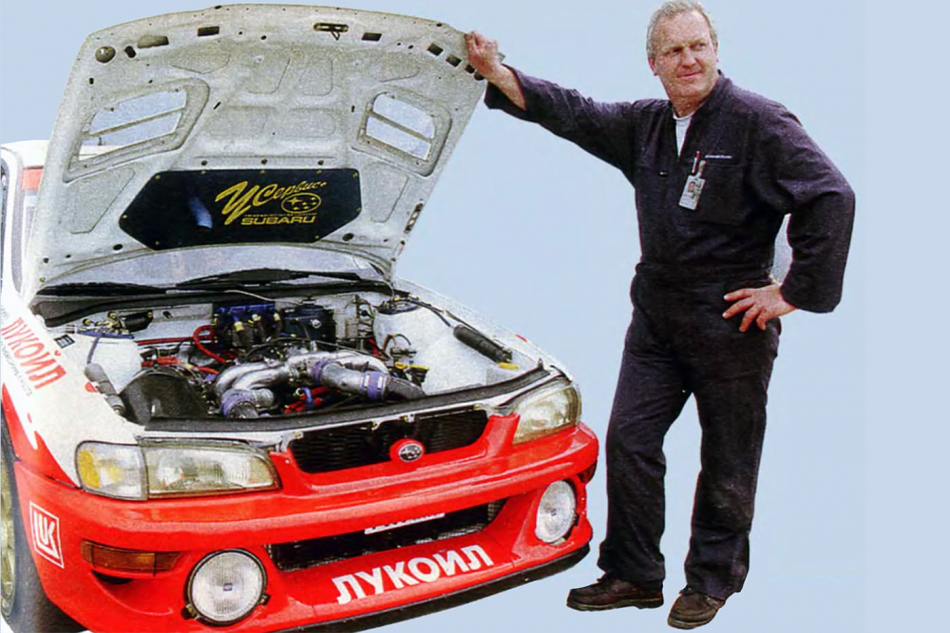
This photo shows Mark Trofimov in the UK at the Prodrive base . The Lukoil Racing team brought a Subaru for a rebuild:
If we talk about the car itself, then at the first two Russian stages we started the engine with an engine program that allowed us to drive up to four races without rebuilding. At that time, we could not use a more advanced program, because with it the engine could only run on special gasoline, and in Russia at that time there was simply no such thing.
I also remember how I dismantled and rebuilt the gearbox of this Subaru right in Moscow.
By the way! The boxes were located on the territory of the ZIL plant, which was located on Trofimov Street – that’s my last name!
In 1998, in addition to the Russian rally team, I worked in Greece with Aris Vos, another client in Poland, and was also the chief mechanic of the Russian Lukoil circuit team, which featured Honda Accord racers .
I was not present at the last stages of the Russian rally championship – my place was taken by another engineer, Brian Eels. And I subsequently moved to work at the Prodrive plant and my numerous business trips finally ended!”
Boss: Malinovsky
Today, Lukoil Racing is a veteran team in Russian motorsport. But at the beginning of 1998, it was not even a year old. However, the team was already ambitious – in addition to participating in circuit racing, the “oilmen” tried to conquer Russian rally racing.
We asked the permanent head of Lukoil Racing, Evgeny Malinovsky, to recall the events of those years and tell us about the team’s short but very successful participation in the Russian Rally Championship.
Evgeniy Malinovsky: For us, it was one of the initial racing projects when the team was created. At that time, we tried different types of motorsports in addition to the classic circuit. I don’t remember who and how came up with the idea to compete in a modern and very powerful WRC car.
By that time, Sergey Uspensky had been successfully performing in rally for a long time, was a top pilot, so we chose him and Alexey Shchukin. Sergey, by the way, still shows that he is a successful and fast pilot.
We closed this program at the end of the year because the project turned out to be very expensive and ineffective in terms of media impact, although we were pleased with the sporting results.
The team bought the Subaru from Prodrive and after the end of the season Prodrive took it back, compensating for part of the cost.
Lukoil Impreza WRC after Lukoil Racing
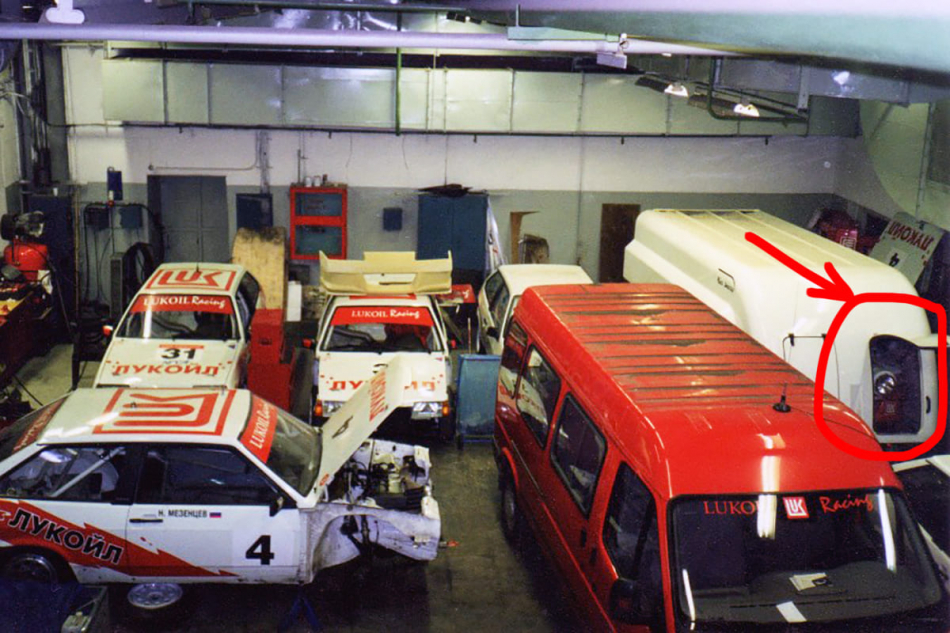
So, the last race on the territory of Russia for the Lukoil Impreza was the July rally “President”, held in the Yaroslavl region. After the victorious finish, the cooperation of Sergey Uspensky and Lukoil Racing was completed. The car from the pits of Uspensky’s team (where it was serviced throughout 1998) was transported to the pits of Lukoil Racing, from where in the fall it went to Great Britain to the location of the Prodrive company.
It was in these boxes that this possibly last photograph of Lukoil’s Subaru Impreza WRC on Russian soil was taken – pay attention to the trailer on the right side of the frame, from there you can see that same Impreza:
That’s it? The end of the story about the secrets and mysteries of the Subaru Impreza WRC with chassis number 97.001? If only! This was only the beginning – between the performances in Russia in 1998 and the auction in 2015, many interesting events happened to the car, but we will tell you about this in the second part of our investigation.
In the second part we will also explain the analogy with the “man in the iron mask” – we haven’t forgotten about it.
In the continuation of this story, New Zealand, Africa, Japan, Portugal, Italy will be mentioned. We will also reveal to you the main secret of the world rally, which the factory teams have been keeping for more than twenty years and in which the very same “LUKOIL” Subaru Impreza WRC is involved.
But the most important thing is that we will tell you where this car is now! As you have probably already guessed, at the auction, with the story about which we began this investigation, a car was sold that had nothing to do with chassis 97.001…
True story of 91.001 Impreza WRC, Part 2:
Before we continue the story of the history of Lukoil’s Subaru, it is necessary to say the following:
1. If you haven’t read the first part of this investigation, be sure to read it .
2. We have an unexpected and completely unplanned addition to the first part. After the publication of the first part, one of the photographers whose work from the 1998 Gukovo rally we used in the article contacted us – his name is Valery Chernyak.
He was present at that race as a guest of Togliatti pilot Alexander Artemenko and took many excellent photos. And most importantly, rare and previously unpublished photos. Valery dug into his archives and sent us a few more of his works. We are publishing them with commentary and explanations:
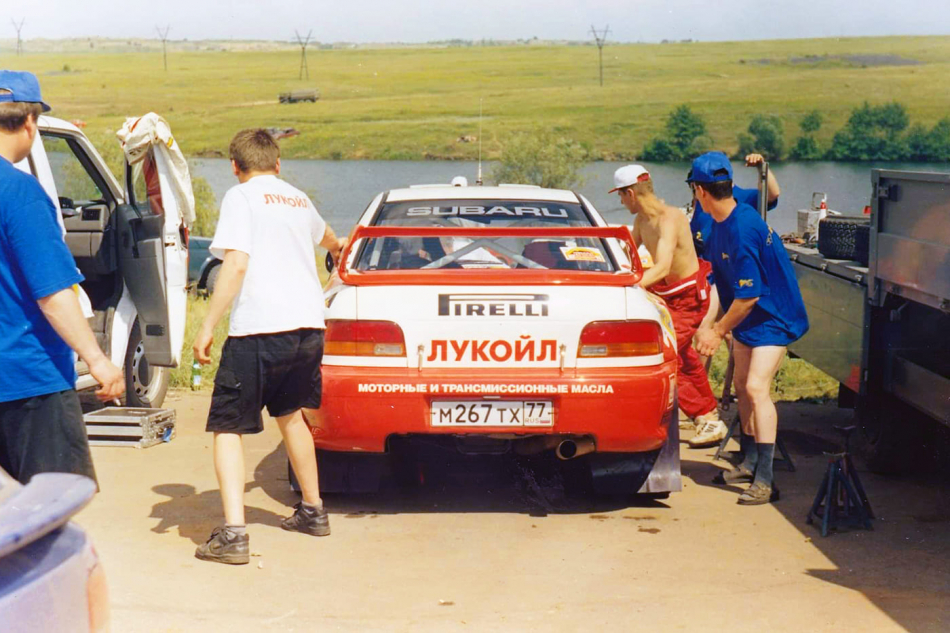
So, the rally “Gukovo”. The crew of Sergey Uspensky and Alexey Shchukin arrived at the service, where it turned out that the mechanics would have to replace the turbocharger and gearbox. The mechanics got to work and quickly replaced the turbine and gearbox with new ones.
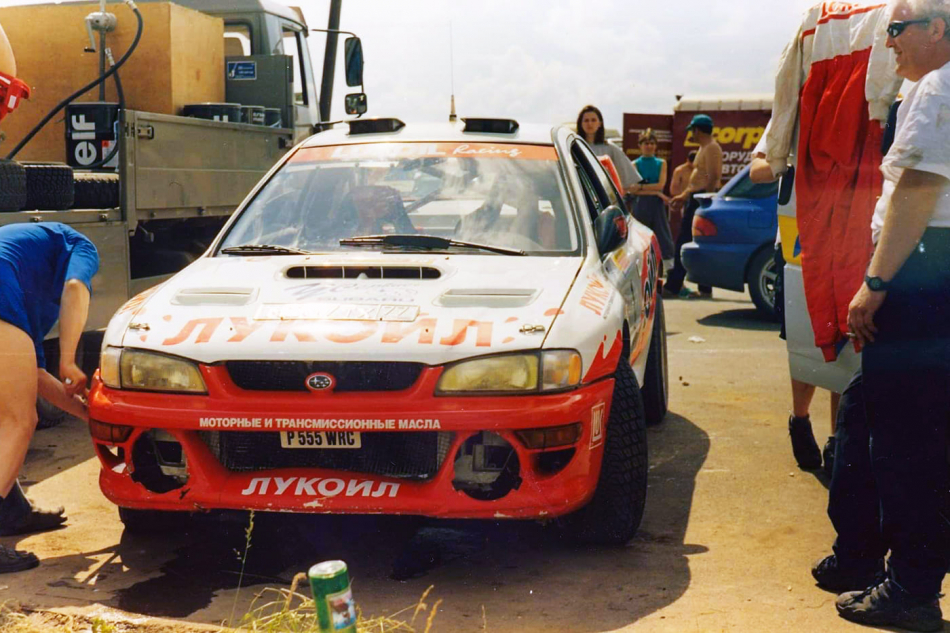
Please note – these are the first known photos of the Lukoil Subaru Impreza WRC with Russian state registration plates! At the same time, there are two numbers in the front: the British “P555 WRC” is left on the bumper, and the Russian “M267TX77RUS” is screwed onto the hood.
And this is the award ceremony for the winning crew of the 1998 Gukovo rally. On the left is navigator Alexey Shchukin, on the right is pilot Sergey Uspensky:
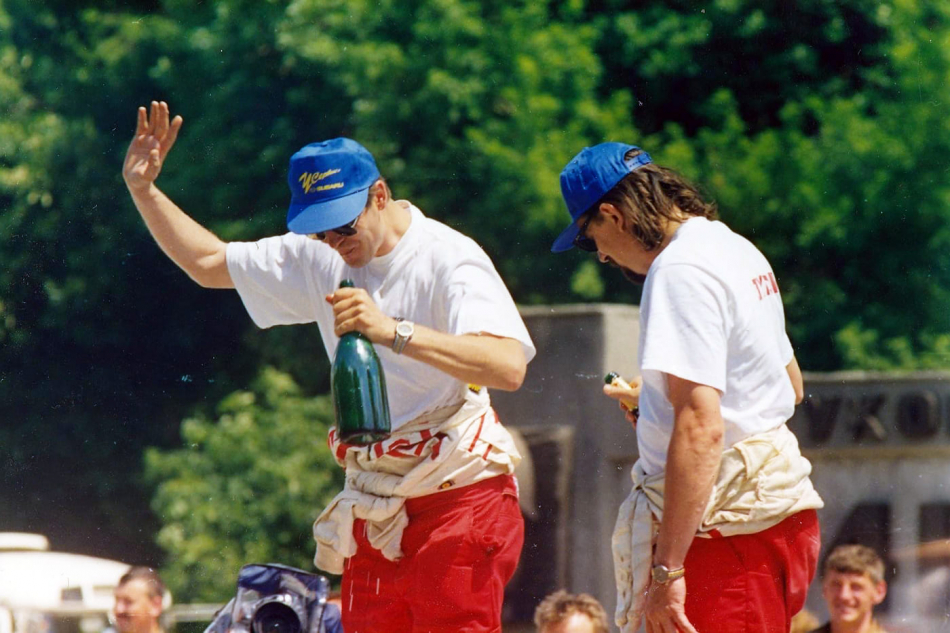
3. And finally, thirdly – regular readers of our site, without even knowing it, already know something about what happened to the “LUKOIL” Subaru Impreza WRC after it was taken out of Russia. We mentioned it in this article – though without naming the chassis number of this car: we are talking about point No. 5. But now you will look at that story completely differently…
Well, shall we move on to the rest of the story?
Failed New Zealand Voyage
In the same year 1998, when Sergey Uspensky and Alexey Shchukin were racing the Lukoil Subaru Impreza WRC in the Russian Rally Championship, the factory team “Subaru World Rally Team” offered a young Finn named Juha Kangas to race in a factory car at the New Zealand stage of the World Rally Championship. The Finn, of course, agreed and received at his disposal a brand new Subaru with chassis number 98.031 and state number “R30 WRC”.
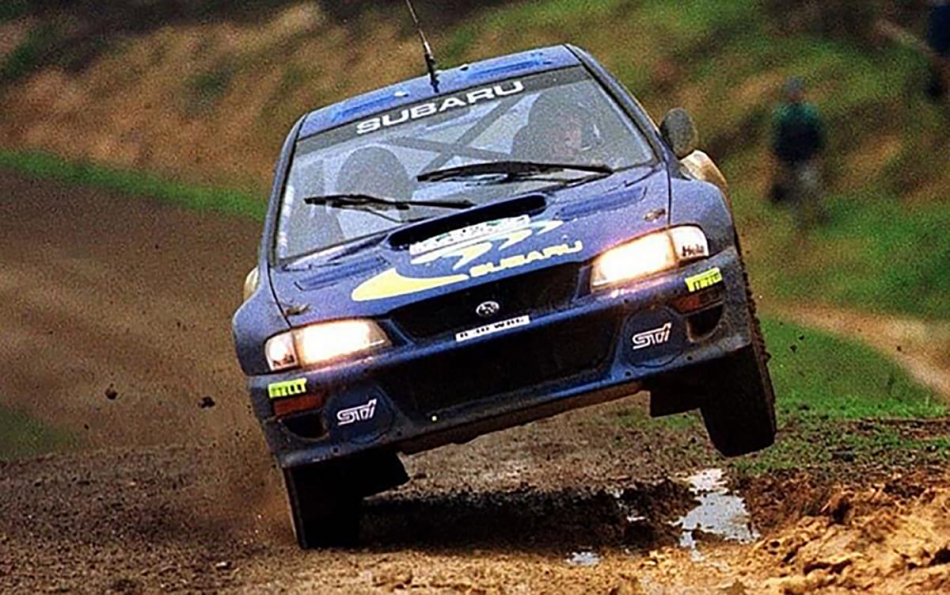
Unfortunately, the race did not go well for him – on the eleventh special stage, the Finn flew off the track and crashed his car. Interestingly, this happened exactly a week after the President rally held in Russia, where Sergey Uspensky competed for the last time behind the wheel of a Subaru Impreza WRC with chassis number 97.001.
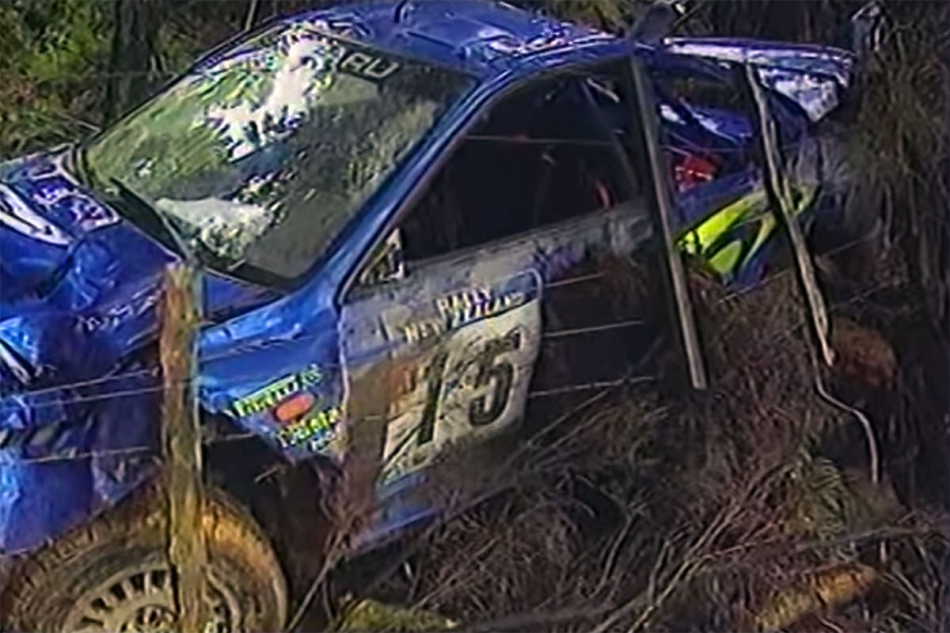
Kangas’ car was badly damaged and Prodrive wrote it off. The remains of the body were bought by New Zealander Possum Bourne, who converted it into a hillclimb racer and registered it with the license plate “ROJ”. This car is currently raced by Alister McRae, the younger brother of Colin McRae.
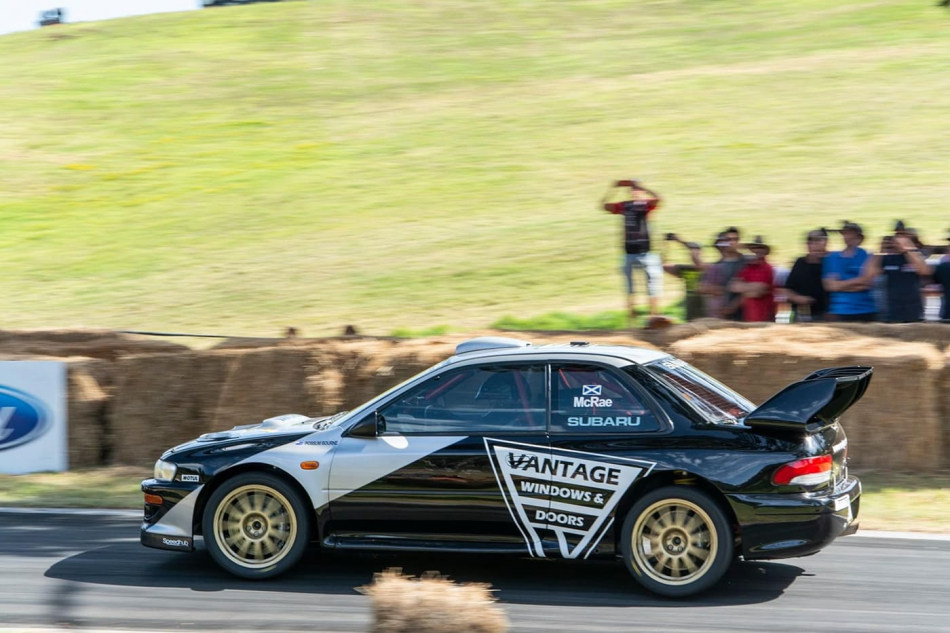
The R30 WRC number plates from Juha Kangas’ wrecked car were temporarily left out of use. But Prodrive soon found a use for them.
Returning home
In the autumn of 1998, the Lukoil Subaru Impreza WRC returned to the Prodrive team base – the Russian team sold the car to its creators. But when the car was sold to Russia in early 1998, it lost its British registration and state registration plates “P555 WRC”, so in order to legalize the car in Great Britain again, it needed new plates, and with them, documents. That’s when the Prodrive managers came across the documents left over from Juha Kangas’ car – chassis 97.001 received new state registration plates “R30 WRC”.
The car was bought by Prodrive, but what to do with it? The factory team didn’t need it as a racing car – by their standards it was already old. But as a test car or a familiarization car – that’s it!
But not just a test car, but a car in Safari Rally specification…
From Russia via Great Britain to Africa
The Subaru World Rally Team brought seven Subaru Impreza WRC cars to the 1999 Safari Rally in Kenya.
Four of them were supposed to participate directly in the race:
R15 WRC (chassis #98.027) – Richard Burns / Robert Reed
R9 WRC (chassis no. 98.022) – Juha Kankkunen / Juha Repo
P7 WRC (chassis #97.015) – Bruno Thiry / Stéphane Prevot
P12 WRC (chassis no. 97.012) – Emmanuel “Emka” Catto / Peter Stone
Three more served as test vehicles and familiarization vehicles – this list included Sergei Uspensky’s former car:
R11 WRC (chassis no. 98.024)
R12 WRC (chassis no. 98.025)
R30 WRC (chassis no. 97.001)
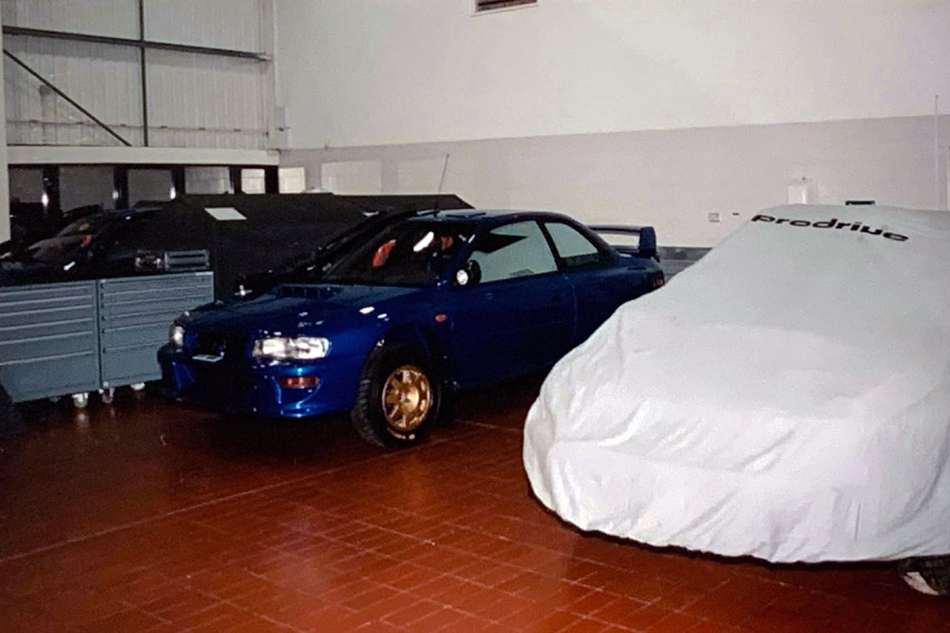
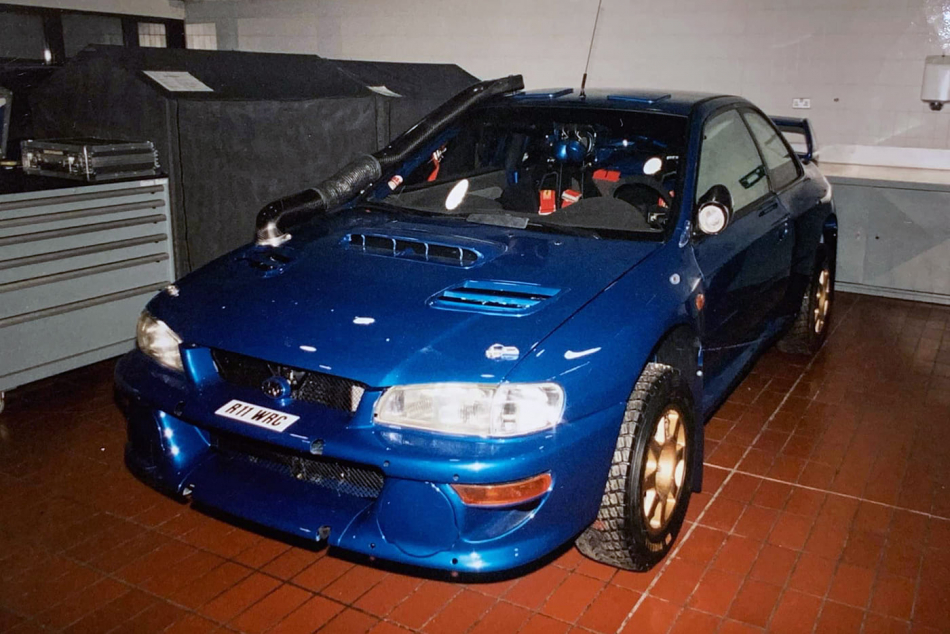
This is what Lukoil’s Subaru Impreza WRC had turned into by December 1998:
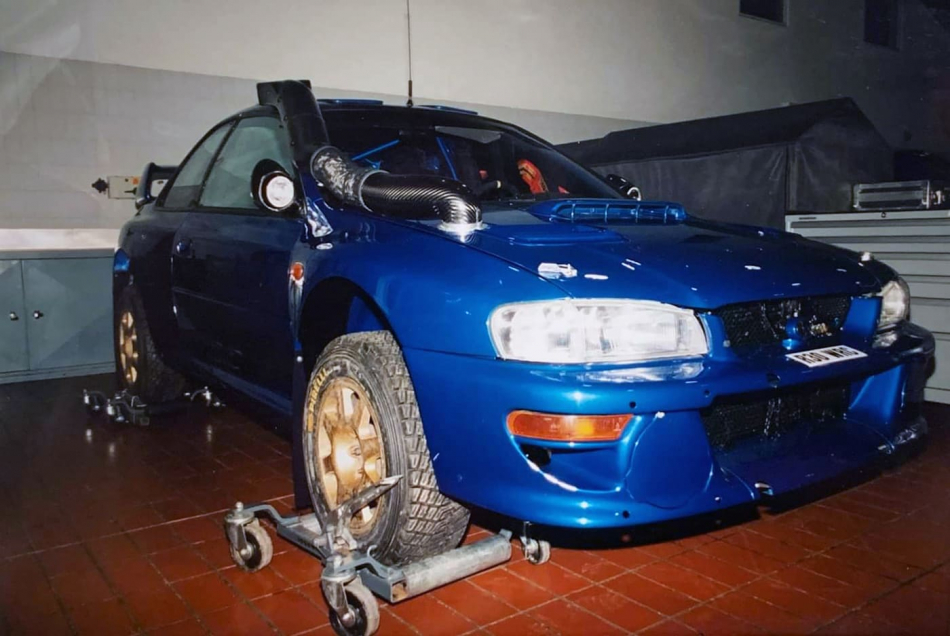
The above photos were taken on December 10, 1998, at the Prodrive base. All the cars were shipped to Africa by sea in containers, so they were ready by the end of the year – even earlier than the cars for the Monte Carlo Rally and the Sweden Rally, which were held before the Safari Rally, but the delivery of cars to the first two stages was less logistically challenging than the delivery to Kenya for the third stage.
The car underwent many changes – as a rule, when creating cars in the Safari specification, factory teams did it from scratch. That is, the teams did not remake existing cars, but started with a bare body. However, this primarily concerned those cars that the factory team crews were supposed to use in the race, but with private cars and test cars, things were different.
The same Emmanuel “Emka” Catto received a car that was converted to the “Safari” specification from a regular Subaru. And exactly the same thing was done with chassis 97.001 – it was simply upgraded from a simple gravel specification to a “heavy” specification.
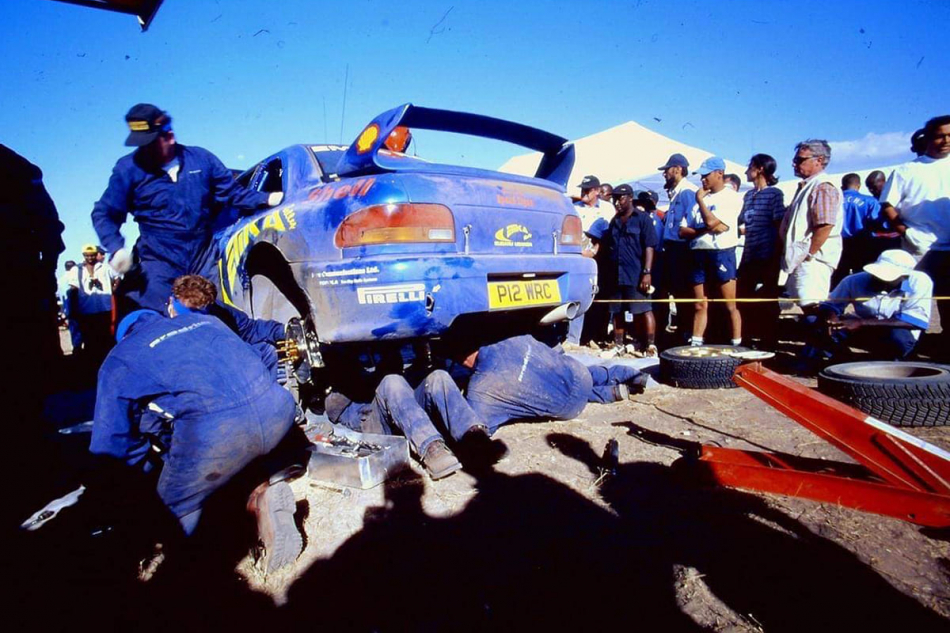
For example, here is Catto’s car during the 1999 Safari Rally – note the two towing eyes in the rear bumper. This is one of the features of the Safari version of the car:
What was the difference between a regular “gravel” machine and an “African” one? Here is a list of the main changes and additions:
- snorkel (engine intake pipe extended to roof level)
- rear view mirrors with headlights to scare away animals (yes, these headlights were not needed as additional light, but for intimidation)
- Tubular front bumper – “bullbar”
- increased ground clearance
- fuel tank increased to 120 liters
- External fuel filters
- full size hydraulic jack
- two Coralba navigation instruments
- Larger volume washer reservoirs
- Reinforced rear bumper mount with two towing eyes
- gearbox of a different specification and with different gear ratios
- other shock absorbers
- four washer nozzles
- body reinforcement in several places.
This is how the Lukoil Subaru was turned into a Safari car, and after the Russian special stages it immediately went to Africa – it ended up in Kenya, where it was involved in an incident that became the main secret of the world rally.
The main secret of the world rally
The history of motorsports hides many secrets, but sooner or later everything secret becomes clear. Well, to one degree or another. However, there is one incident from the very recent past that is still a secret – attempts to shed light on it have not been successful so far.
Moreover, during this investigation, the direct participants in that story have repeatedly tried to convince me that everything we will tell you today is nothing more than fiction and that none of this happened. But in the end, they still gave in and admitted: “Yes, in fact, it is true…”
On February 14, 1999, the second round of the World Rally Championship ended in Sweden. Mitsubishi factory team driver Tommi Mäkinen won his second victory in a row, strengthening his lead in the series’ individual standings. And just two days later, a plane landed in the Kenyan capital, Nairobi, which delivered the recent participants of the snow and ice race to Africa. They were to spend almost two weeks there.
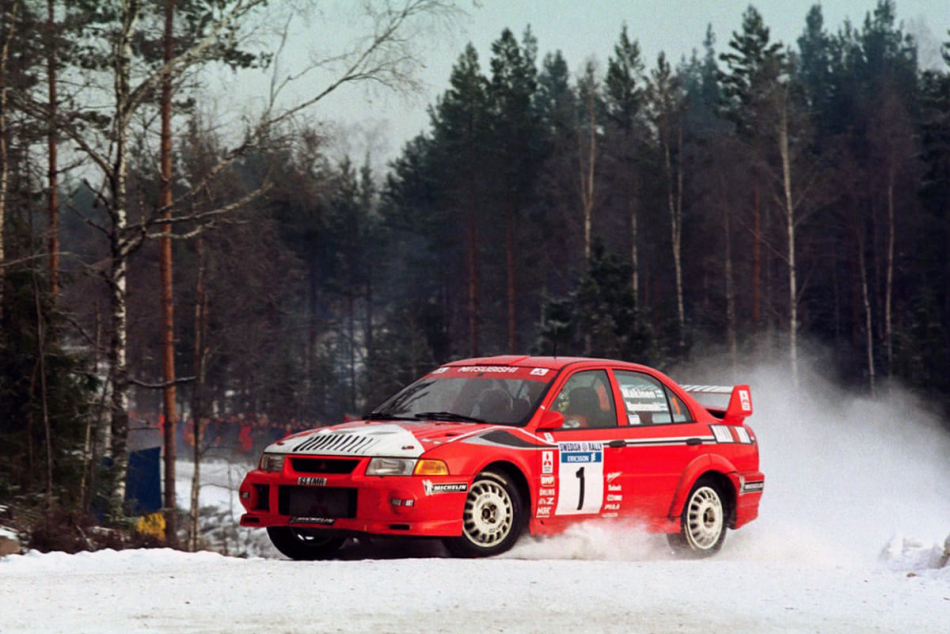
It was in Kenya from February 25 to 28, 1999 that the Safari Rally, the third stage of the World Championship, was to take place. But this is a special race – we have already written about this on our website – so two weeks before the start of this crazy rally, teams and crews began to move chaotically around the area where the future race was to be held: long pre-race tests, familiarization, photo sessions, and so on.
And it was precisely between February 17 and 23 that the villainous fate showered the race participants with so many problems that it was time to wonder: had someone cast a curse on the 1999 Safari Rally?
No, the Kenyan round of the World Rally Championship has always had an impressive list of troubles, but here they began to rain down on the drivers even before the start of the rally.
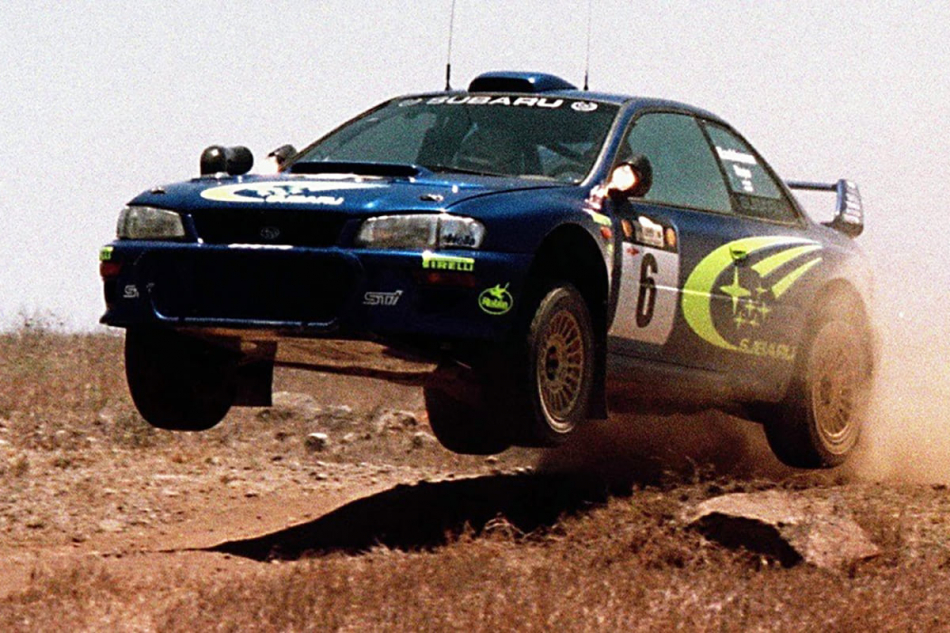
And the most interesting thing is that despite the fact that the 1999 race turned out to be the most intense in terms of these pre-start problems, journalists and fans know about only one of them – the one that happened to the Ford Martini factory team driver Thomas Radström. But the team and the organizers tried to hide the rest of the events!
Did you try? Yes, but nevertheless we were able to collect information about each of the incidents and will tell you about them now.
So, on February 17, the only widely known pre-race incident occurred. The rally organisers had thrown a party to celebrate the upcoming race. The event went so well that after it was over, Ford Martini factory driver Thomas Radström slipped on the stairs of his hotel and fell. And he fell so badly that he broke his leg!
It was impossible to keep this a secret – the team had to urgently look for a replacement for him, and the then little-known Norwegian Petter Solberg flew to Kenya to replace Radström.
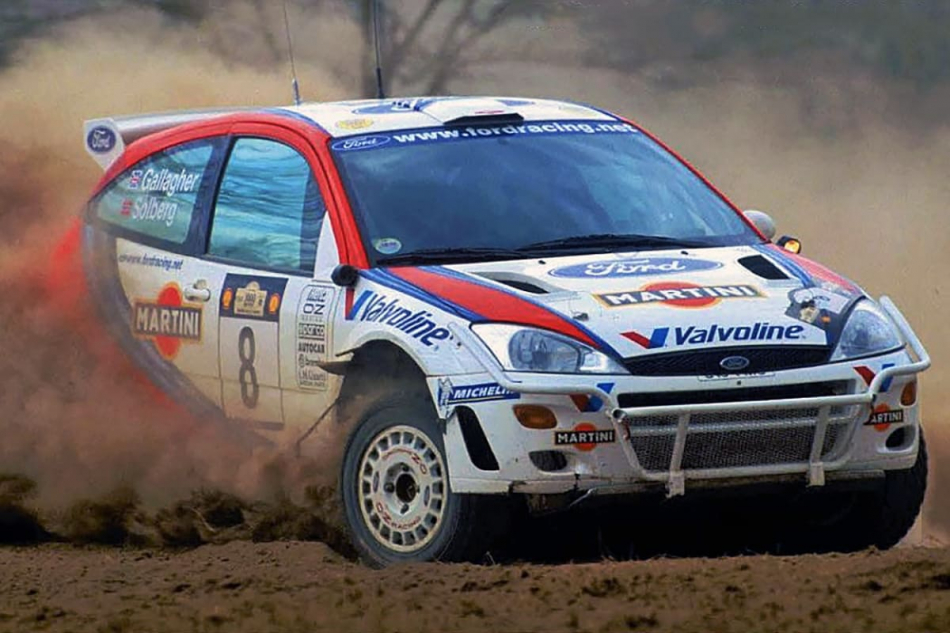
But if the team’s press service couldn’t hide the fact of the fall and fracture, the PR people managed to conceal several important nuances. Firstly, after the fall, the Swedish racer also suffered a craniocerebral injury – he even lost consciousness. The second strictly classified fact was that Thomas fell while in a state of extreme intoxication.
The rest of the incidents were not publicized at all, which makes it all the more interesting for you to learn about them.
On February 18, the very first day of testing – and the very next day after Radström’s fall – mechanics from the Toyota Team Europe factory team managed to drop the Toyota Corolla WRC test car from its jacks right onto the foot of Carlos Sainz’s co-driver Luis Moya! The result: a broken big toe.
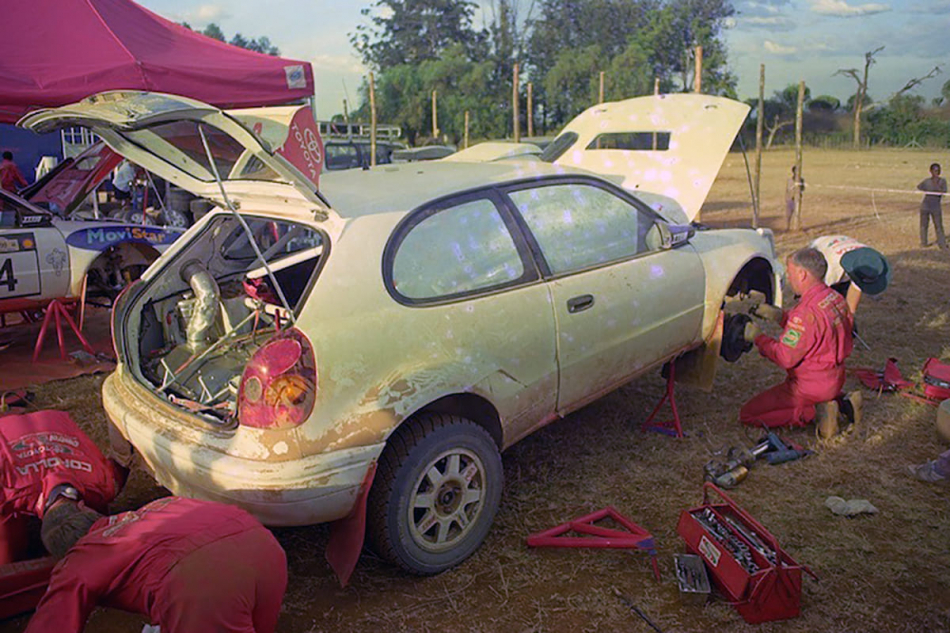
On February 23 – already during familiarization with the rally route – Carlos Sainz himself was forced to dodge a giraffe running across his path. As a result, his Toyota flew off the track and knocked down several trees. On the same day, the third pilot of the same team was unlucky – Kenyan Ian Duncan crashed into a drain pipe at full speed and simply destroyed his racing car. The Toyota Team Europe team had to urgently prepare another car for him, for which they used a test Toyota Corolla WRC:
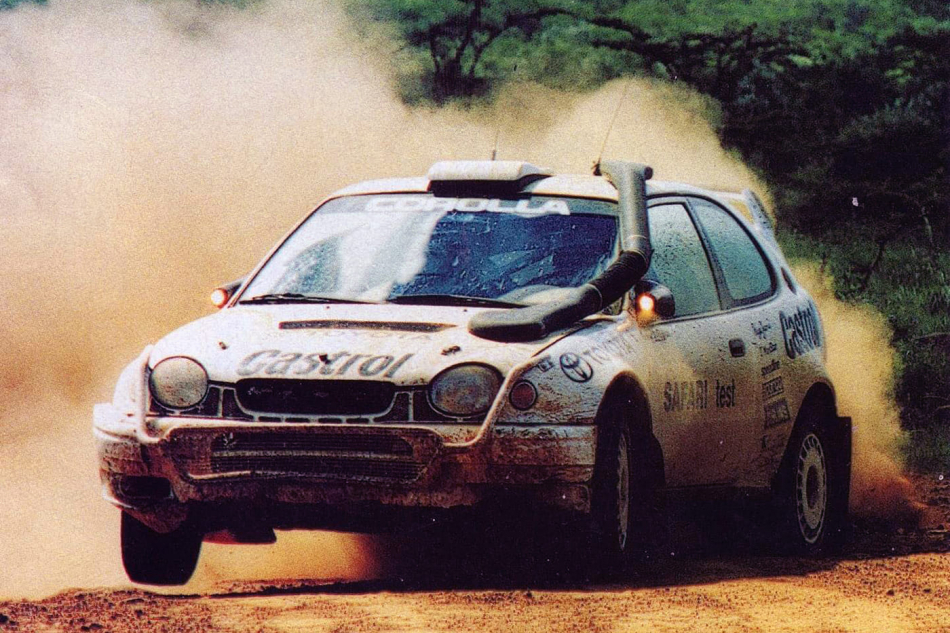
But our story today is dedicated to the story that happened on February 19, 1999, on the second day of pre-start tests, and it was this story that became the main secret of the world rally.
So, on February 18, the factory teams began a three-day test session.
The Toyota works team began work with local driver Ian Duncan in the Lake Baringo area, while the SEAT Sport team’s drivers and test drivers worked with two cars in the Ngong Mountains.
The season leaders – the racers of the factory team “Marlboro Mitsubishi Ralliart Team” – went wild. The team brought at least five cars to Africa – two racing cars, two for familiarization and one test car. In addition to the main drivers of the team Tommi Mäkinen and Freddy Loix, test driver Lasse Lampi came to Kenya.
This is what the Mitsubishi team’s test base in Kenya looked like back then – yes, it was a real mobile operation:
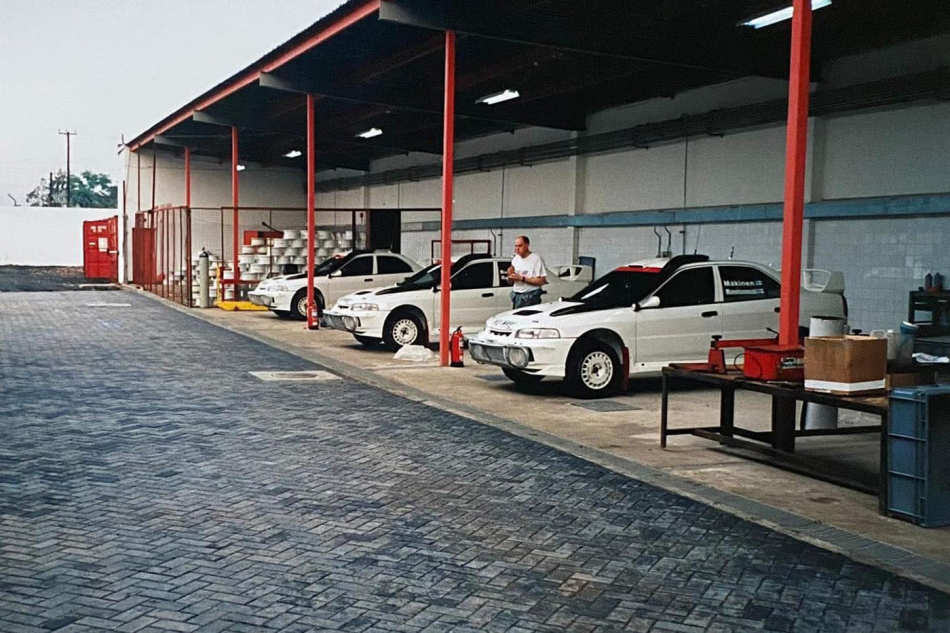
All three were involved in the test sessions – Mäkinen and Loix were preparing for the upcoming race on the rocky special stage in the Kamukuru area (near Lake Magadi), while Lampi was testing the car for heat and looking at suspension settings 180 kilometers further north in Kongoni, near Lake Naivasha.
The Subaru World Rally Team brought a similar line-up to Africa – only Richard Burns, Juha Kankkunen, Bruno Thiry and the team’s new test driver Robbie Head worked together in the vicinity of the city of Kajiado. As we already know, they had both the racing cars and three test cars at their disposal – specially prepared Subaru Impreza WRCs that had no sponsor stickers.
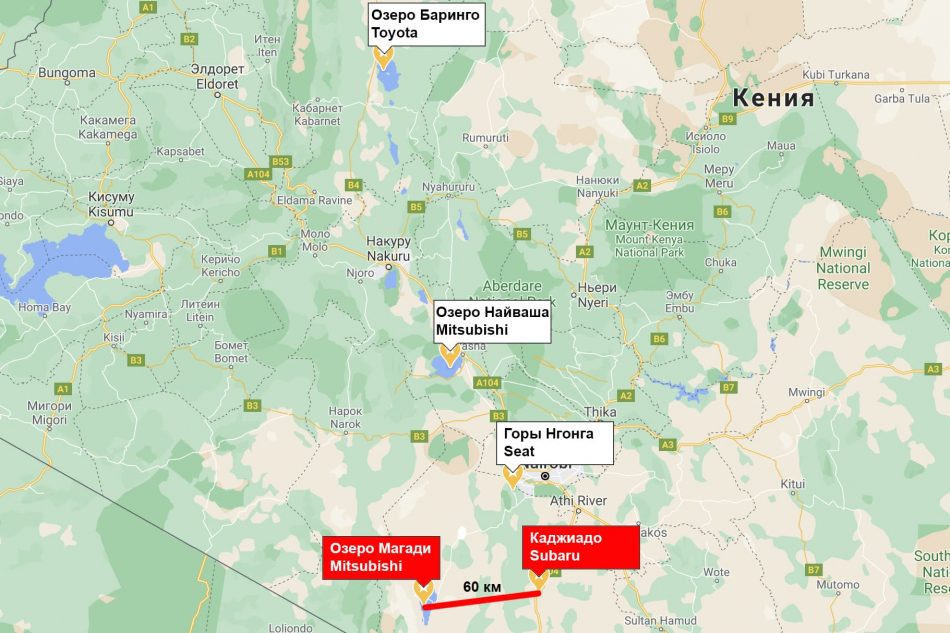
An important point is that while all the teams were located over a distance of five hundred kilometers (the distance between Lake Baringo and Lake Magadi), Mitsubishi and Subaru conducted tests at a distance of only sixty kilometers from each other! And this is extremely close by Safari Rally standards – in that same 1999, the length of the special stages of the race ranged from forty-nine to one hundred and twenty-four kilometers!
Perhaps this played a cruel joke on the racers. After all, on the second day of testing, at some unfortunate moment, the paths of the Subaru test pilot and one of the Mitsubishi racers crossed – their cars collided head-on! And this Subaru was the same former Lukoil Impreza WRC with chassis number 97.001.
At the wheel of the Subaru was thirty-year-old Scotsman Robbie Head. He was appointed as a full-time test driver for the Subaru World Rally Team only in January 1999. Before that, he competed in the British Rally Championship as part of the Ford factory teams (in 1992 and 1993) and Renault (from 1995 to 1998).
Robbie is best remembered by British fans for two serious accidents he suffered in 1996 while driving for Renault Dealer Rallying UK at the Manx Rally and the British round of the World Rally Championship:
Robbie was a close friend of Colin McRae and Richard Burns, so it was no surprise that Head, who was out of a job and a racing contract ahead of 1999, was recruited to help Burns – Robbie became the team’s test driver and also a “scout” for Richard Burns.
And it just so happened that on February 19, 1999, Robbie Head became involved in a completely unbelievable traffic accident!
As part of the tests, Head was testing tires for the upcoming rally. But at some point, his blue Subaru Impreza WRC with the state number “R30 WRC” came head-on to a snow-white test Mitsubishi Lancer Evolution IV.
This car appeared for literally a couple of seconds in one of the video reports about the 1999 Safari rally:
This was no ordinary test car – it was a former factory racing car with the registration number “P55 MRE”. It was this car that Tommi Mäkinen himself drove to win his home round of the World Rally Championship in 1997, and then Richard Burns drove it in 1997 and 1998.
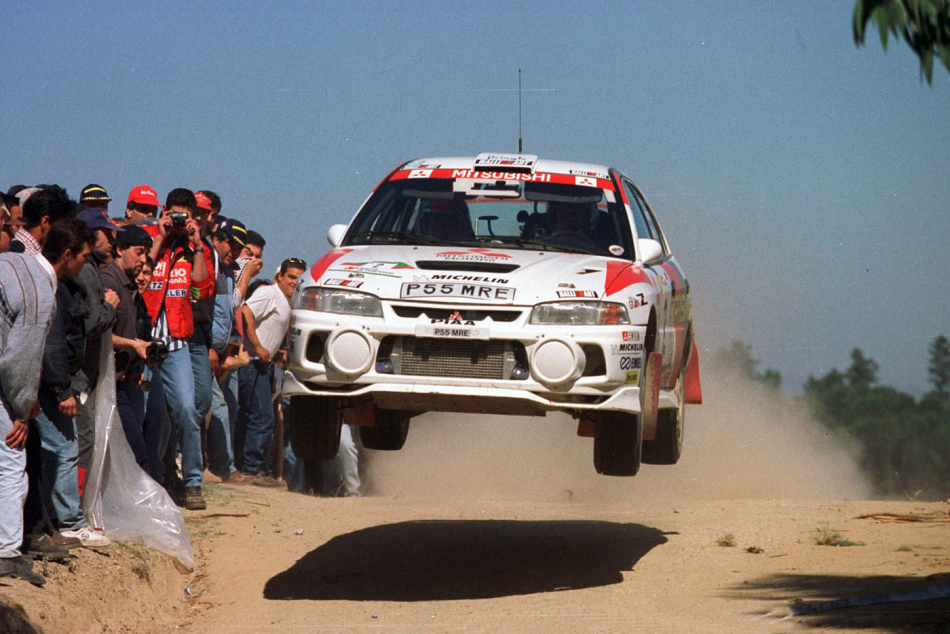
But who was driving the Mitsubishi at the time of the accident in Kenya in 1999? Also some test pilot? Then what was the purpose of the aforementioned secrecy?
The name of this pilot is Tommi Makinen. Yes, this unfortunate Lancer was piloted by the three-time world champion himself – it was his test car!
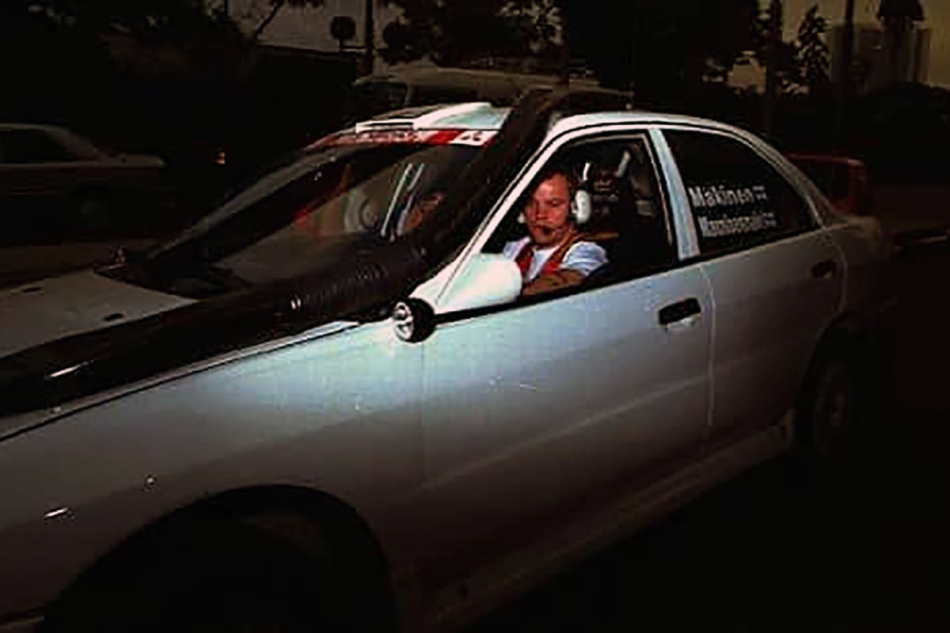
Robbie Head’s co-driver Steve Turvey was injured in the accident, and this was one of the reasons why the teams agreed to keep the details of the incident under wraps. Almost no one talked about the accident anywhere, no one wrote about it anywhere – the only one who dared was the legendary British journalist Martin Holmes, who briefly mentioned the incident in his annual book.
Why was and is this accident surrounded by a veil of secrecy? It would seem that more than twenty years have passed, and the management of the teams (now defunct) still avoids talking about this topic. On condition of anonymity, we were told the following information – in 1999, officials of the International Motorsport Federation (FIA) actually let the situation slide, so to speak, but if attention is drawn to the accident, everything could flare up again…
Perhaps that is why Mitsubishi tried to hush up the situation as much as possible – the team destroyed all traces of the P55 MRE chassis. It simply disappeared, without even appearing in the team’s pits after the race. The remains of the car were kept in some secret shelter for over a year, and in June 2000, they were quietly written off as scrap. At the same time, the state number “P55 MRE” was never used by the team again.
But Prodrive took a more complicated route. Using the example of the previously mentioned chassis 98.031 destroyed in New Zealand, can you already imagine the behavior of Prodrive employees? The car is smashed to pieces? That means its documents and state registration plates are free, so they can (and should) be put back into use!
After the accident, the Subaru looked sad – chassis 97.001 was badly damaged:
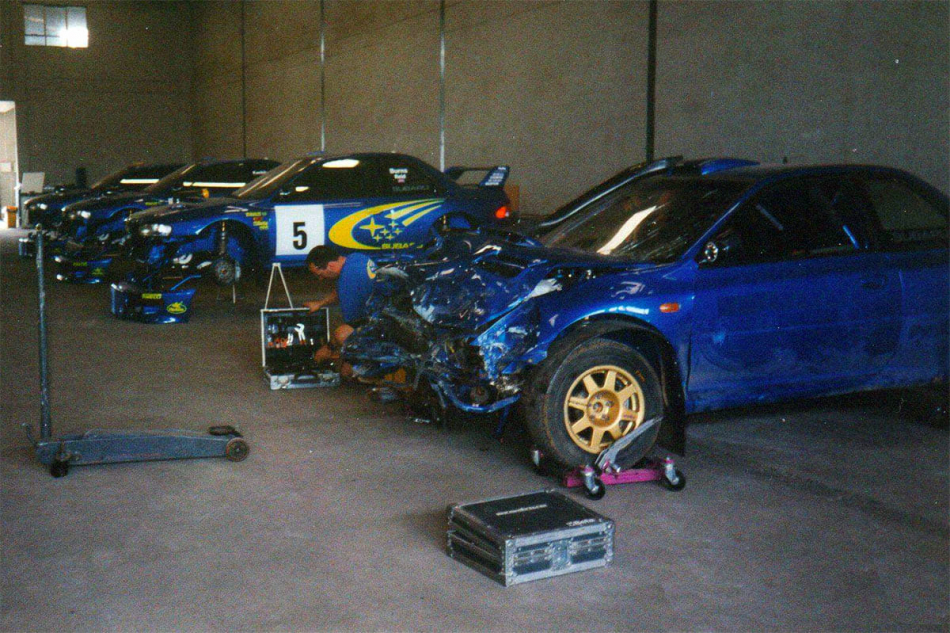
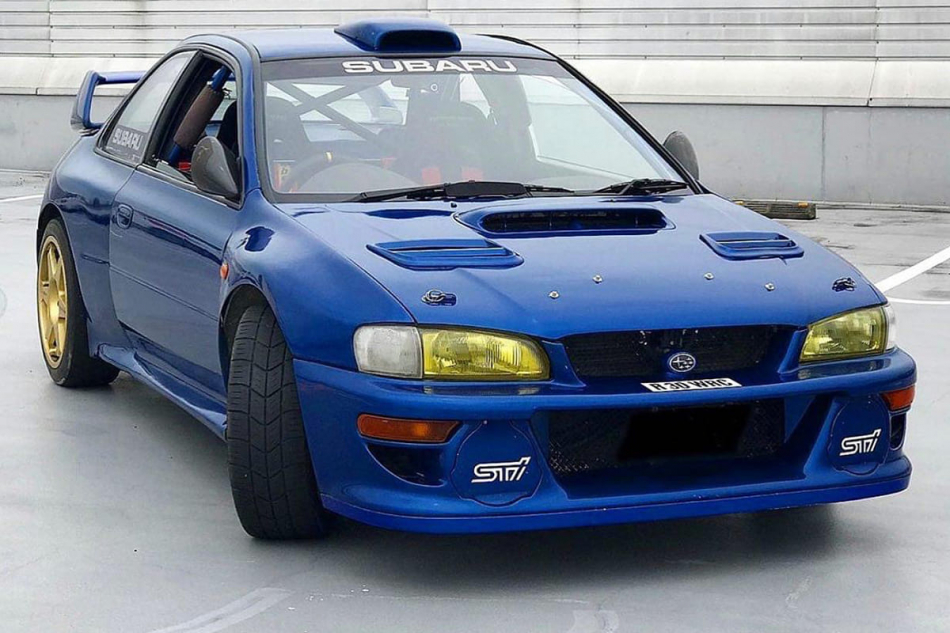
And a year later – on March 11, 2000 – the Subaru Impreza WRC with the state number “R30 WRC” looked completely different! It appeared in perfect condition and asphalt specification at the start of the Camacha rally under the control of a Portuguese driver named Vitor Sa. He bought this car to compete in the Madeira Island Rally Championship, as well as in selected stages of the Portuguese Championship and the European Rally Championship. Then in 2002, the Subaru was sold to Tommy Graham in Ireland, after which the car with the state number “R30 WRC” was seen in the UK and the Netherlands. And in 2010, the Subaru was acquired by the Japanese Junya Matsushita, who converted it into the only road version of the Subaru Impreza WRC in the world:
This is how Lukoil’s Subaru Impreza WRC ended its combat journey…
Stop, stop, stop! We were joking! 🙂
In fact, this is a different car, which has been given the “R30 WRC” number – Prodrive has once again made a mess of the state and chassis numbers. Apparently, this is done to confuse as much as possible those who want to track down the route of that same car that was damaged in the accident – that is, to confuse us. But you can’t fool us that easily!
So, in an attempt to cover up the accident, Prodrive once again separated the registration plate and chassis number. One of the brand new and newly built cars, which should have been given the chassis number 98.032, was instead given the chassis number 97.001, registered with the registration number “P18 WRC”. This happened on March 5, 1999 – exactly two weeks after the collision between Robbie Head and Tommi Mäkinen.
That same weekend, Italian Diego Oldrati drove this car to the start of the fourth round of the European Rally Championship – the Italian “Rally del Ciocco e Valle del Serchio”, where he took sixth place. After that, he drove it in two more races, and this photo was taken at one of them (the 1999 “Piancavallo” rally):
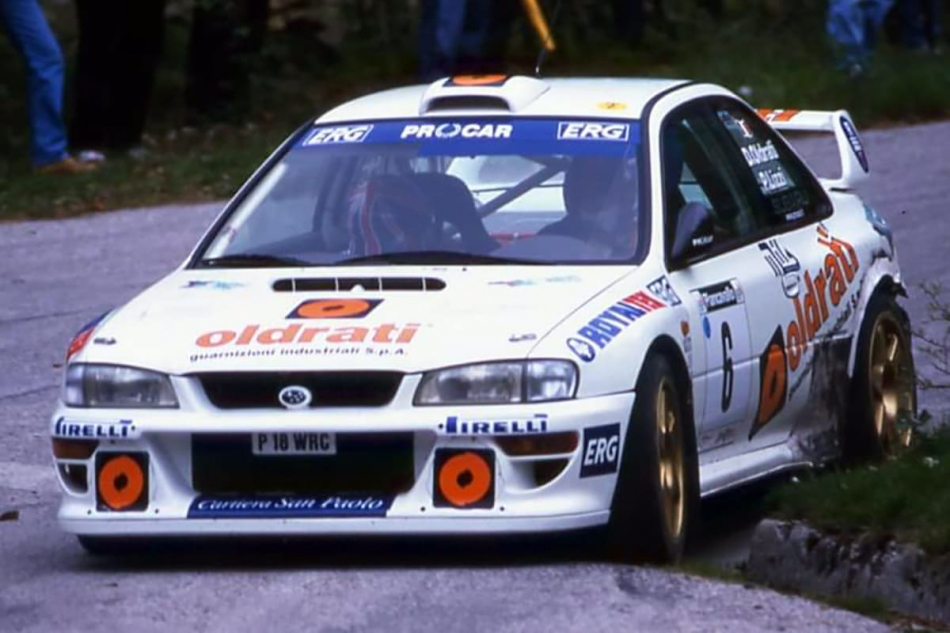
This is how a brand new Subaru Impreza WRC car with an old (foreign) chassis number 97.001 assigned to it finally received the very same state number “P18 WRC”, with which this car was put up for auction a few years later, where it was sold on June 6, 2017 for almost 300 thousand US dollars.
By the way, in the first part of this investigation we reported that back in 1998 Gregoire de Mevius was racing a Subaru Impreza WRC with the license plate “P18 WRC” and then we said that the claims of the auction house “H&H Classic Auctions” that it was chassis 97.001 were a lie. So, in fact, on February 12, 1998, the license plate “P18 WRC” was assigned to a Subaru Impreza WRC with chassis number 97.002 – the same one that previously had the license plate “P982 YWL”! We have already written about this car and its connection with the Russian rally .
The R30 WRC number plate, which was vacated after the accident in Kenya in 1999, was given to another brand new car, which was given chassis number 98.031 – the number of the same car that was wrecked by Juha Kangas at the Rally New Zealand. And it is this Subaru that is now in Japan, converted into a civilian version and owned by Junyo Matsushita.
By the way, we asked Junya if his car had any internal design elements typical of the Safari specification – he found nothing of the sort. And when asked about the body number of his car – it is applied by welding in the area of the car’s rear suspension – he surprised us with his answer: “Yes, I know there should be a number there. But it’s not there!”
This is what the number should look like:
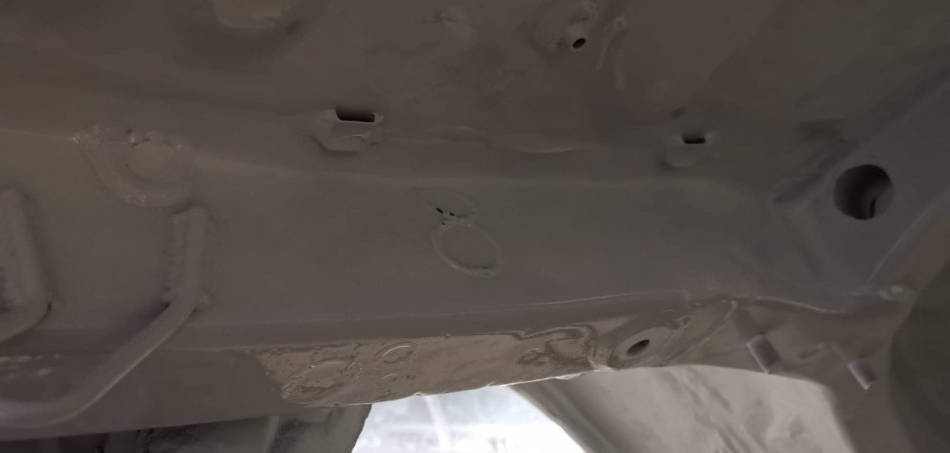
Perhaps Prodrive simply forgot to apply it in the chaos surrounding the whole situation?
The Man in the Iron Mask
But if the chassis number and state registration number were assigned to two other cars, then where did the body from the Lukoil car go? Where is the body number 1? Now we know that at the auction in 2017, instead of the original chassis 97.001, which was tested by Colin McRae and on which Sergey Uspensky competed in the Russian Rally Championship in 1998, another car was sold. But where did the chassis go? Maybe it was also destroyed after the accident in Africa, as they did at Mitsubishi?
But no – Prodrive has more enterprising employees than Mitsubishi! The original car with chassis number 97.001 was delivered to the UK, where it was completely dismantled. But Prodrive did not throw away the body and did not destroy it. Instead, the managers of the British company… sold it to a private team! Without documents, without a plate with the chassis number – but “attaching” to the damaged body a detailed account of the accident involving Head and Mäkinen. Well, they sold it and sold it – out of sight, as they say.
In turn, the private team found a client who bought the surviving body from them and paid for the reconstruction of the rally car. The specialists of this private team did almost the same thing as the mechanics of “Vantage Motorsport” who restored the New Zealand Impreza for Possum Bourne. But the forces and means were somewhat different, and most importantly – this chassis did not have and does not have any documents at all. Officially, it does not exist at all. Legally, this is not a Subaru Impreza WRC with chassis number 97.001 – it is completely unknown what.
But now we know that the real car, which Sergei Uspensky drove in Russia in 1998 in the colors of Lukoil Racing, was not sold at auction in 2017.
Unfortunately, at the request of our sources, we cannot tell you where this car is located and who it belongs to. We will simply show you one photo that no one has ever published before – here it is, the car with chassis number 97.001 in its current state:
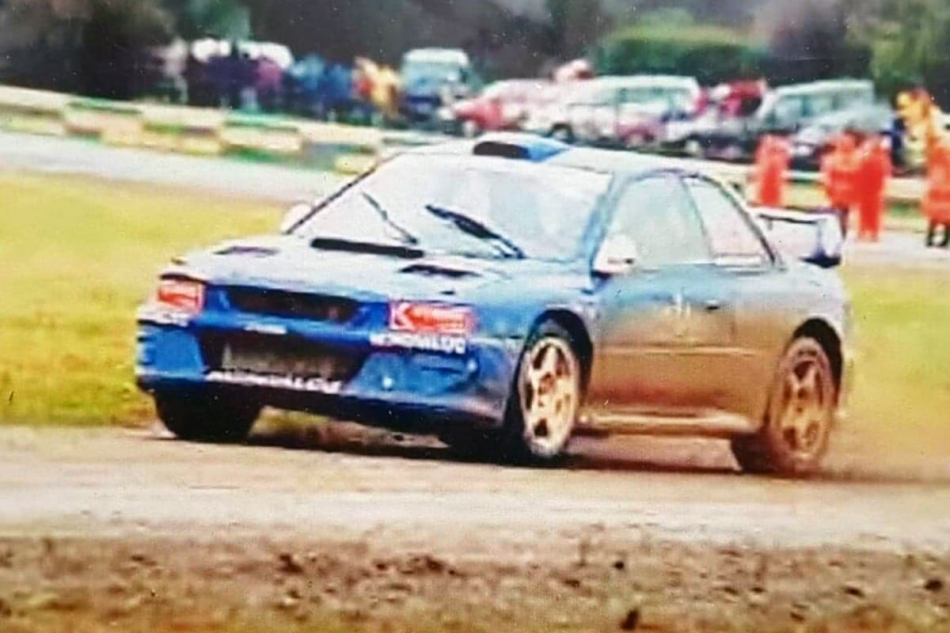
The original body of the Subaru Impreza WRC with chassis number 97.001 has an “almost” WRC engine and transmission, but still, this car certainly cannot be called a full-fledged rally “World Rally Car”. However, this car is the very same “Lukoil” Impreza WRC, which was the first car in this category in the world. And even if no one knows the truth – now you know it.
Now it’s time to recall two points from the first part of this investigation. First, let’s recall the big quote: “Acid analysis of the bodywork proved that the car [ Subaru chassis number 97.001] had seen a lot during its racing career, but amazingly the original Prodrive bodywork“It has been preserved and meticulously restored by the same team that built it in 1996.” In light of everything we have found during our investigation (including the fact that the chassis up for auction was built from scratch in 1999), you can judge for yourself how honest auction houses can be.
Well, secondly, now is the time to return to the analogy with the man in the iron mask, which we tried to use at the beginning of the text.
After all, the Lukoil Subaru Impreza WRC is truly a modern-day “man in an iron mask.” It was born and immediately became a legend – and no wonder, because it was the world’s first “World Rally Car” category car. Then it won a big victory in the Russian Rally Championship. From there it headed to a distant southern country, where it almost died. And upon returning to its homeland, it was stripped of all its titles and literally ended up in a landfill. At the same time, its place in the history of world rallying was taken by an impostor car.
But despite everything, our hero is alive. He is deprived of his name and history, he is not given the honors (which go to the impostor), but he exists and even participates in races – even if these are just amateur rally-cross rides.
Don’t be sad, Lukoil’s Impreza.
We remember you and will never forget you!
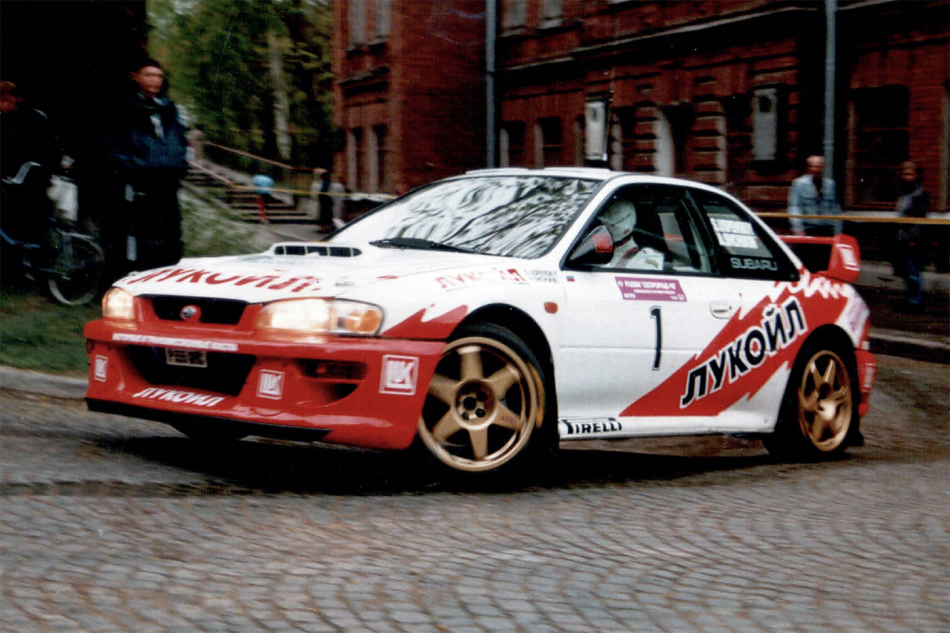
Announcement of future articles
The investigation into the history of Lukoil’s Subaru is complete. But this is only the beginning of our series of articles about the history of Russian rally. And to make it more interesting for you, we will hint at a couple of interesting facts that we will tell about in future texts:
1. For Sergey Uspensky, Subaru with chassis number 97.001 was the first, but not the last Impreza WRC.
2. Chassis 97.001 went to the Safari rally in 1999 after finishing its performance in the Russian rally championship. But among those seven “African” cars there was one Subaru that made the return journey – after the race in Kenya in 1999 it ended up in Russia! Try to guess – which one?
3. In total, three Subarus arrived in Russia, which in different years participated in the Safari rally as part of the factory Subaru World Rally Team.
Reply